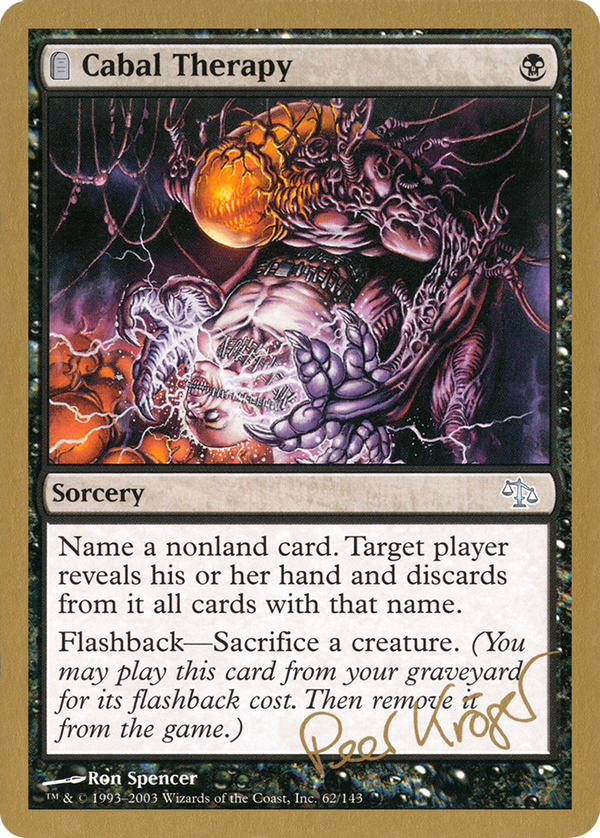
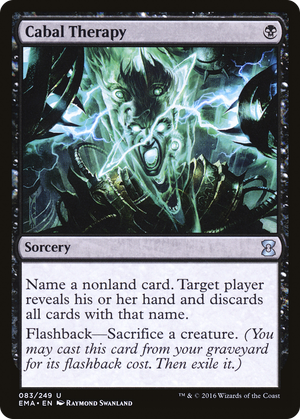
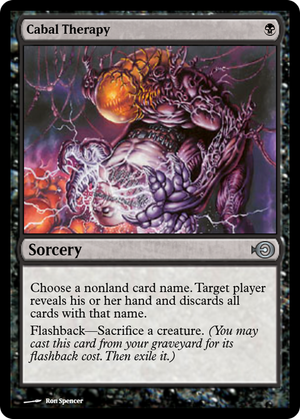
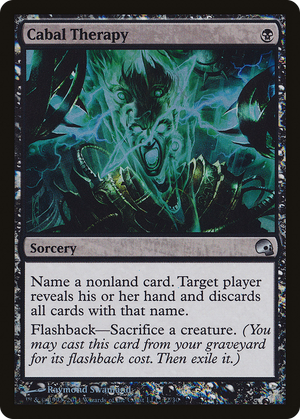
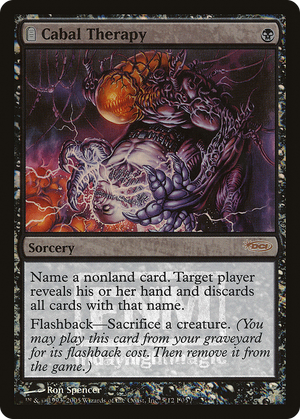
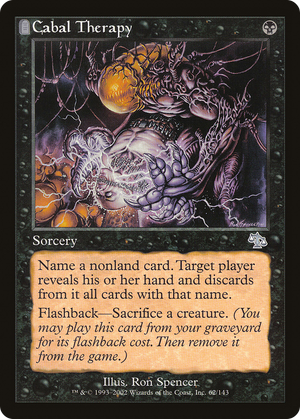
Cabal Therapy

Hand disruption that names a card you can already see, because by the time you cast it the second time you have read the opponent's hand and know exactly what to strip. The first cast is a blind one-mana Duress: you guess at the threat and hope. The flashback rewrites the math, because its cost is a sacrificed creature rather than mana, which means it can be paid off a board you were going to lose anyway, on a turn when you have already watched a hand resolve and learned what the dangerous card is. The spell is still a sorcery both times (flashback changes the cost, not the timing), so the trick is not catching something on the stack: it is using the graveyard cast to convert a body you no longer need into a precision strip the opponent cannot see coming. That conversion is why Cabal Therapy stopped being a fair discard spell and became an engine part. A sacrificed creature is not a cost in a deck built to sacrifice creatures: it is a trigger you wanted to pay regardless, which is how the card found its home alongside recursive bodies and token makers that turn a single discard into a repeatable disassembly of someone's hand. The design lesson was that trading one resource for another (a body into information and attrition) opens combinations a mana-priced version never could. Decades of black discard have leaned on the idea, but this remains its cleanest statement.