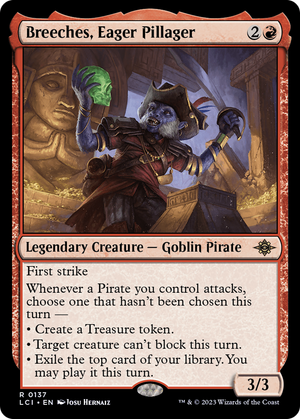
Breeches, Eager Pillager


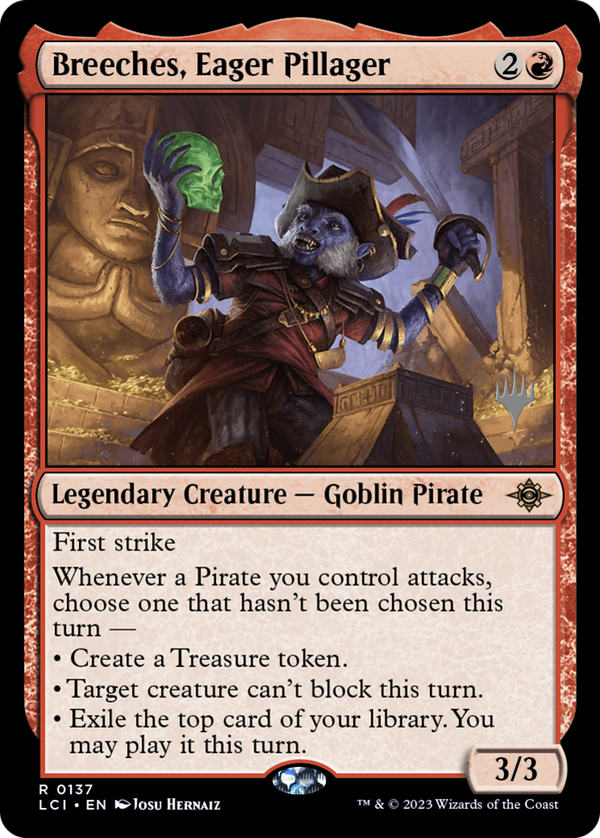
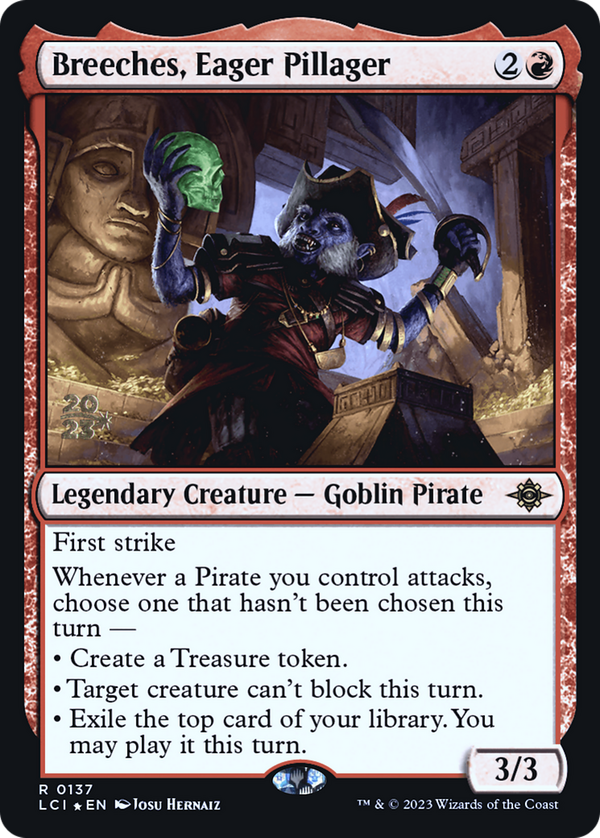
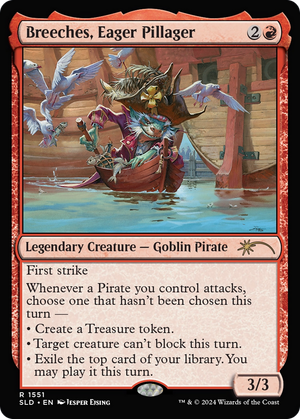
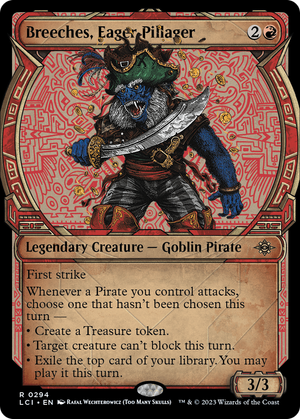
The design trick is the "hasn't been chosen this turn" clause, which turns a single combat step into a menu you can raid more than once. One Pirate swinging gives you one mode; a second attacker unlocks a second; a third opens the last. So the card scales not with how hard your creatures hit but with how many of them come to the party, rewarding a wide board over a tall one. Each mode does structural work you would normally split across separate cards: Treasure for the ramp-and-fix axis, blocker suppression to force damage through a stalled ground, and an impulse-draw to keep the hand from running dry. The impulse mode in particular means a go-wide Pirate deck rarely runs out of gas, since every attack refuels while it pressures. Crucially, the trigger reads whenever a Pirate you control attacks, not Breeches specifically, so Breeches itself can hang back on defense and still cash in the modes off its crewmates' swings. The 3/3 first-strike body then becomes a choice rather than an obligation: it can lead the charge and win the combat exchange that turns the ability on, or it can guard the flank while the rest of the fleet triggers it. That flexibility is the real density here: three genuinely different strategic effects folded into one Goblin Pirate, gated by a per-turn selector, with a body that plays offense or defense depending on which mode you need most.