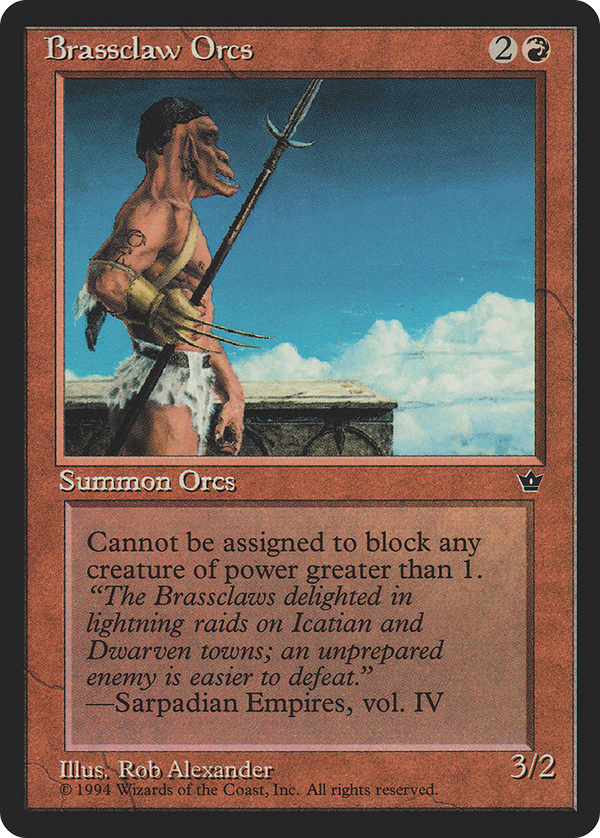
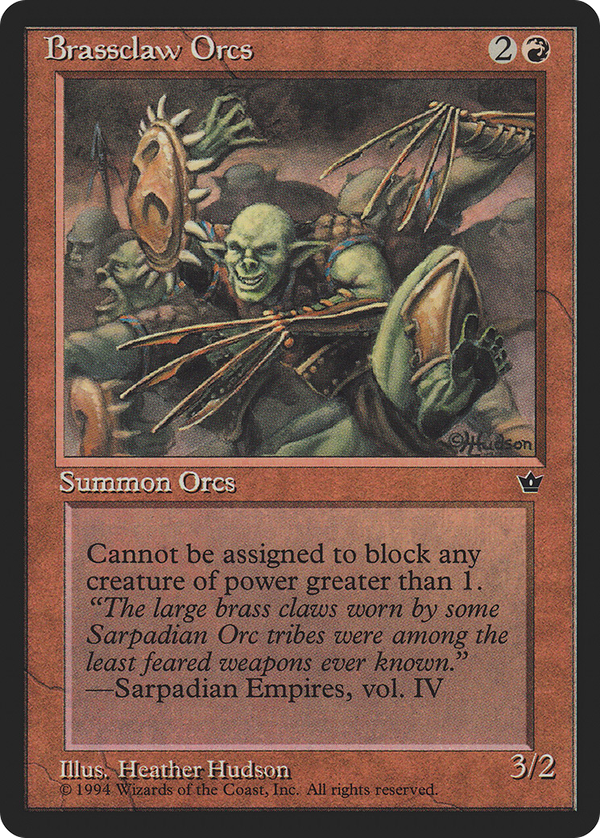
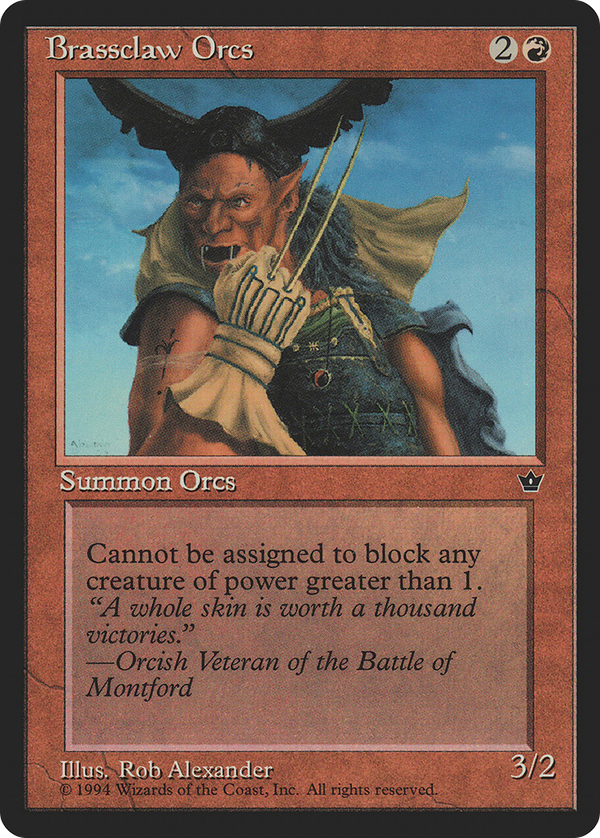
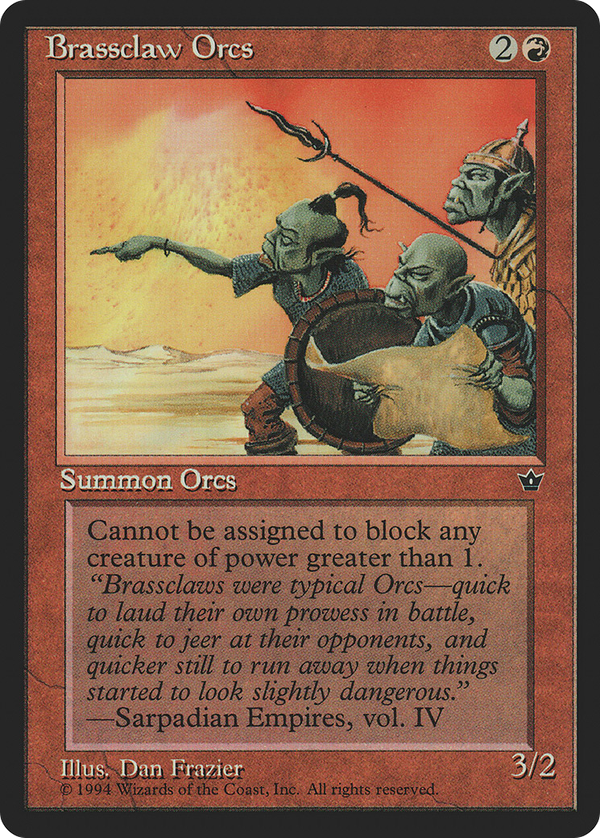
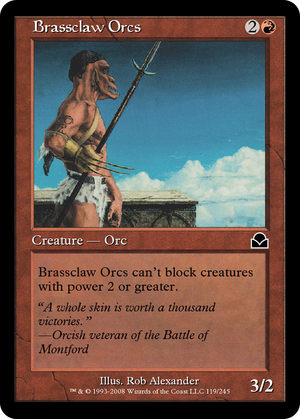
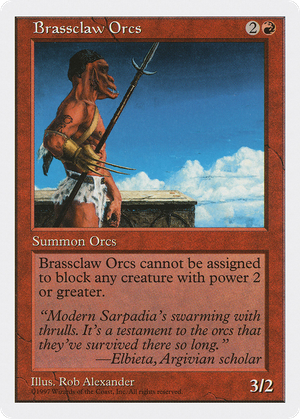
Brassclaw Orcs


A 3/2 for three mana was an aggressive rate in the game's early years, and the blocking restriction is the tax that pays for it. The structural logic is one Wizards leaned on heavily before keyworded mechanics existed to do the work: rather than print a fragile body, hand the player a real attacker and then carve a hole in its defensive utility. The orc swings for three but folds on the back foot, unable to hold the line against anything with power 2 or greater. That asymmetry is the design's entire reason for existing, and it reflects an era that priced creatures by stapling penalties to good stats instead of building the cost into a smaller frame. The clause that does the carving is precise in a way the modern game rarely bothers with anymore: it gates the orc's own blocking on power, not toughness, so a 5/1 attacker sails past it unblocked while the orc can still chump a lowly 1/4. That conditional, hyper-specific defensive restriction is exactly what later sets would fold into cleaner keywords or simply abandon, but it captures the unfiltered combat-math approach of a set built around attrition and grinding board states.