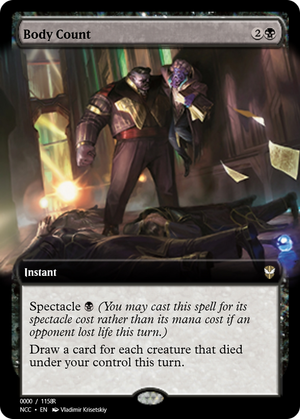
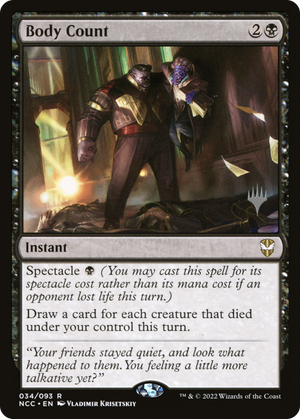
Body Count


The reward is doubled up in a way most card-draw is not: the spectacle discount asks an opponent to have lost life this turn, and the count asks your own creatures to have died this turn, so a single aggressive sacrifice turn feeds both halves at once. A go-wide aristocrats deck that attacks, trades, and pings life away has already paid for everything by the time this resolves. The timing edge is real but specific: this only counts deaths that have already happened, so you cast it after a board wipe resolves, not in response to one, and after a combat step where your attackers chumped and your outlet did its work. Cast too early and the creatures are still alive; the count is a tally of a graveyard that already exists, not a bet on one about to form. What holds it in check is that it mirrors your own board's destruction rather than refilling from nothing: whiff on a turn where nothing dies and you drew air. It belongs to the black tradition of turning your own graveyard into resources, closer in spirit to the death-payoff draw of fodder-and-outlet decks than to a flat card-advantage engine. The design bets that a deck willing to sacrifice its creatures in bulk is exactly the deck that has already bloodied someone, and pays it for both crimes at instant speed on the same card.
Rules text
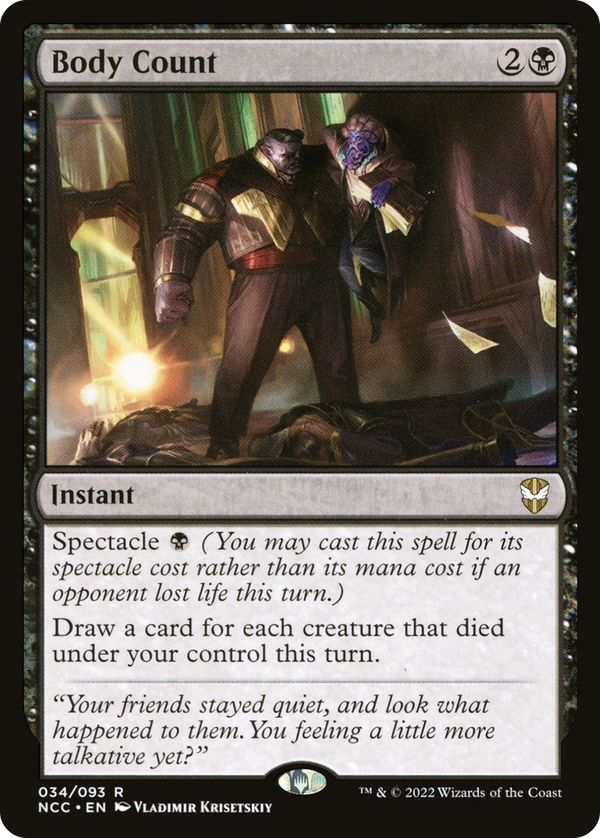
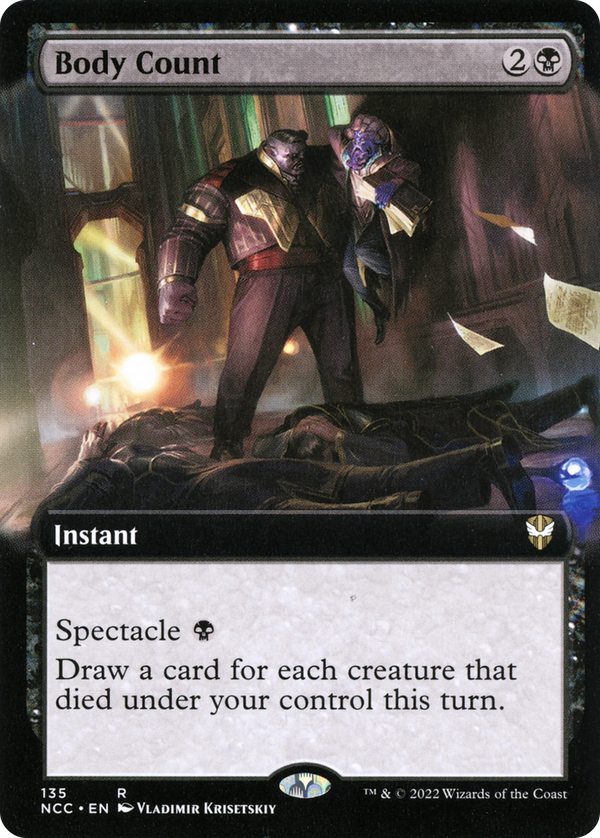
(You may cast this spell for its spectacle cost rather than its mana cost if an opponent lost life this turn.)
Draw a card for each creature that died under your control this turn.