Blackmail

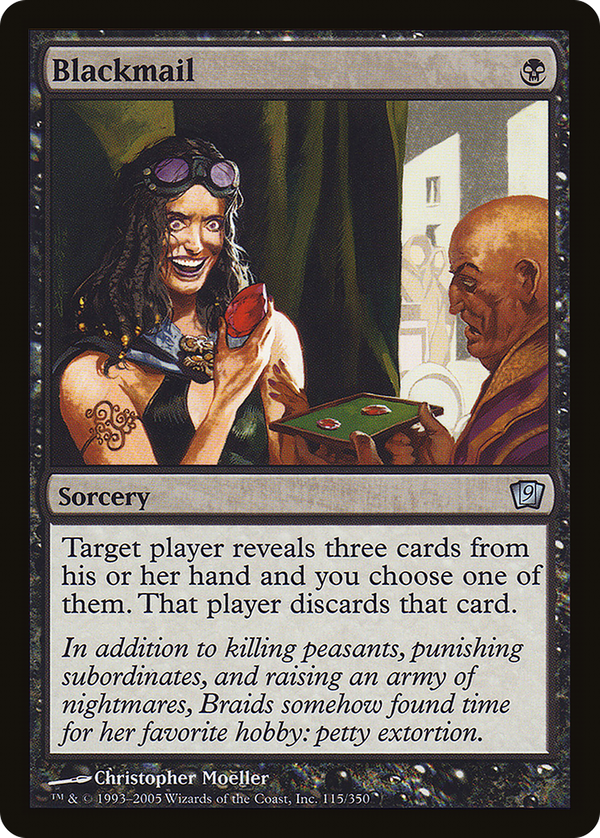
Discard spells live or die on who picks the card, and this one hands the choice to the wrong side: the caster chooses what falls, but only from a window the opponent controls. That tension is the entire design. Compare it to Duress or Thoughtseize, where you see the whole hand and take the scariest thing; here the opponent picks which three cards to reveal, so a savvy player baits you by surfacing two real threats alongside the one card they were always willing to lose. You get the better-of-three illusion of control while the defender quietly sets the menu. The reveal-three-take-one structure also leaks information in both directions, which makes it a worse blind strip than its competitors and a clumsier targeted one. Unconditional one-mana discard is never nothing, but the mechanism is built to underperform against an opponent who understands it. What it does reliably is hit a player holding fewer than three relevant cards: against a depleted or topdecking hand, the choice tilts back toward the caster because there is nothing junk left to reveal. That is the narrow seam where Blackmail is genuinely good, and the reason it reads as a sorcery the opponent helps you cast.