Bishop of Rebirth


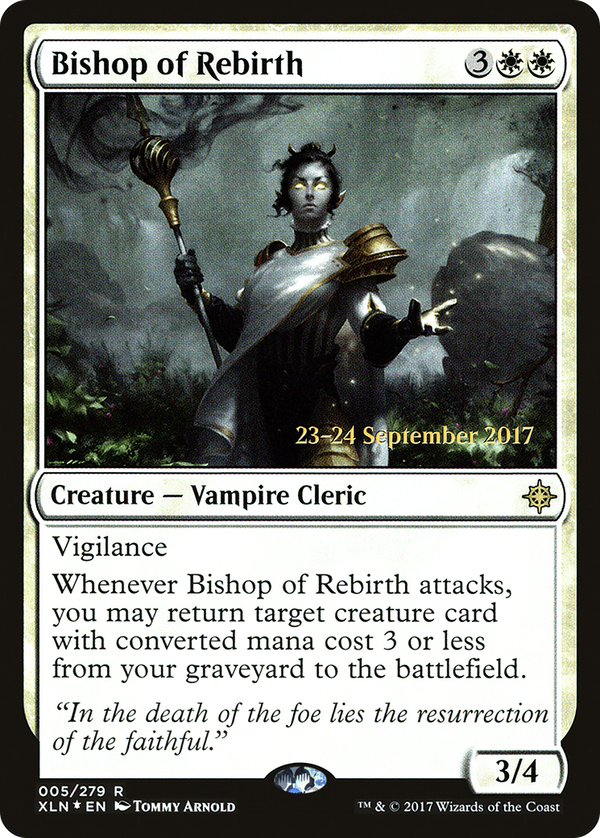
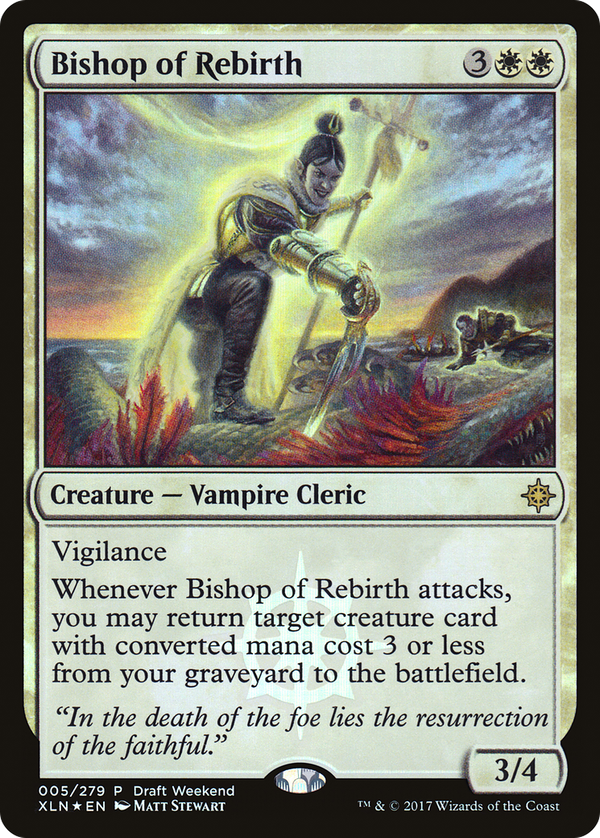
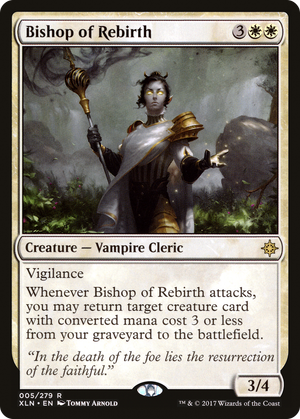
The recursion engine fires on the attack trigger, not an enters-the-battlefield ability, and not on combat damage either: declare the attack and the reanimation resolves, whether or not the swing gets through. Vigilance is what turns that timing into something more than a keyword tax. Because the body does not tap to attack, it stays back to block the crackback, so the loop can repeat every turn the card survives combat without ever leaving your defenses open. The mana-value ceiling is the cost that keeps the rate fair: capping targets at three or less walls the engine off from ferrying back true bombs and confines the toolbox to cheap creatures (mana producers, sacrifice fodder, value-on-entry bodies) that pay off across many small turns rather than one explosive one. It rewards a deck built downward, stocking the graveyard with three-or-less targets to return one at a time. This belongs to the family of attack-triggered graveyard engines that ask you to commit to the board and keep swinging, trading the burst of a one-shot reanimation spell for a recurring grind. The vampire cleric framing places it among white midrange creatures whose value comes from durability rather than tempo: a 3/4 that attacks and defends in the same turn and hands you a creature back every time it enters combat.