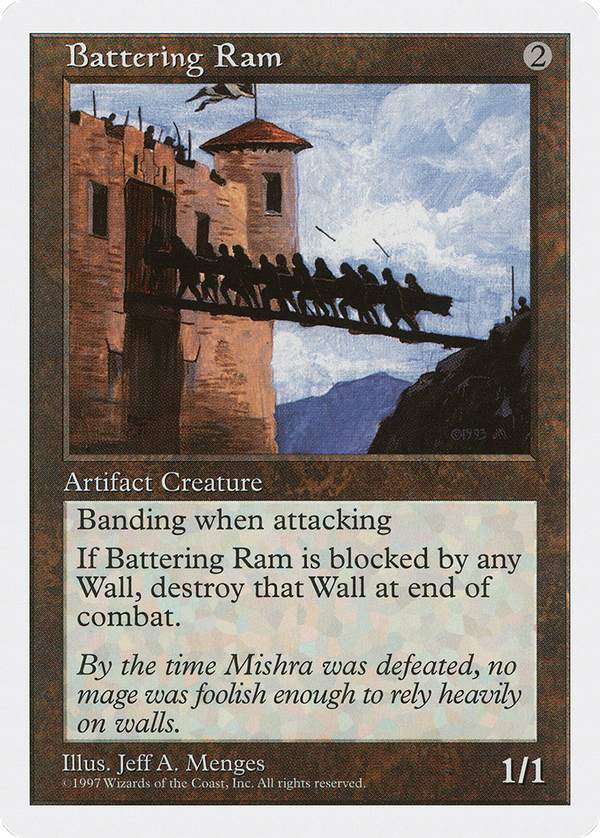
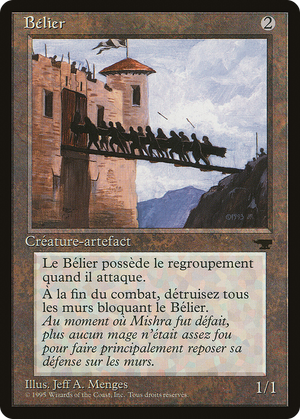
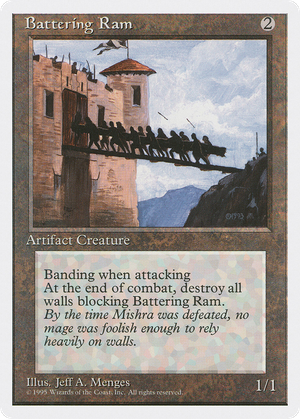
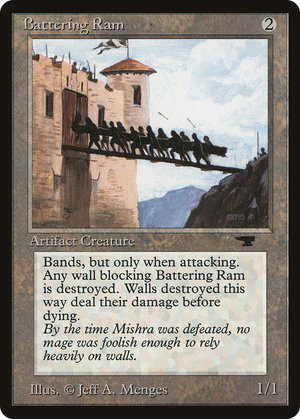
Battering Ram

Walls were real defensive technology in the early game, and this 1/1 Construct exists for one reason: to make them stop working. The banding clause is the design ingenuity. A body that walks into a Wall on its own gets chump-blocked and trades poorly, but banding lets it attack alongside a genuine threat, and the controller of the blocking Wall loses the right to assign that Wall's combat damage where it would hurt most: you divide it instead. Stack that on top of the destruction trigger and the math turns punishing: the Wall blocks, the Ram lives or dies on damage you steered, and the Wall is gone at end of combat regardless of who came out ahead in the exchange. It is a hoser in the old sense, a narrow answer printed because the format had a problem worth answering, and a colorless one at that, so any deck could run the wrecking ball without bending its mana. The banding rules text printed on the card runs longer than the card's actual function, which is itself a small monument to a period when Magic was willing to ship niche tools with rules complexity wildly disproportionate to their power level. Walls have largely retreated from competitive play and banding has been retired as a keyword, which leaves this as a fossil: legible, specific, and quietly elegant about a problem the game no longer has.