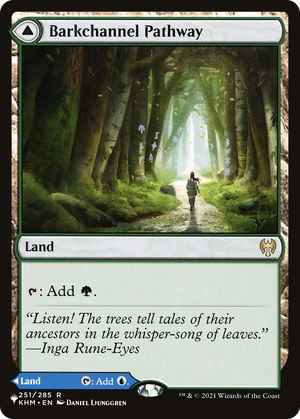
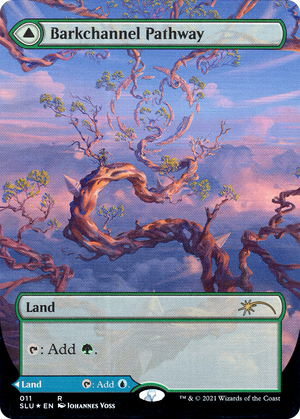
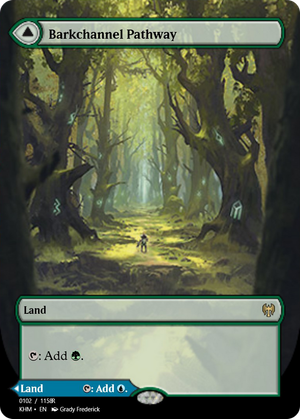
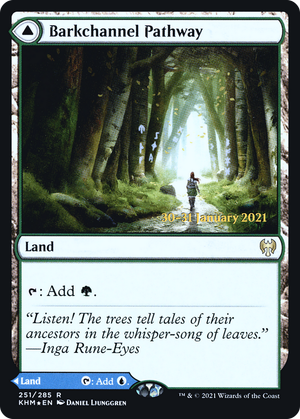
Barkchannel Pathway // Tidechannel Pathway
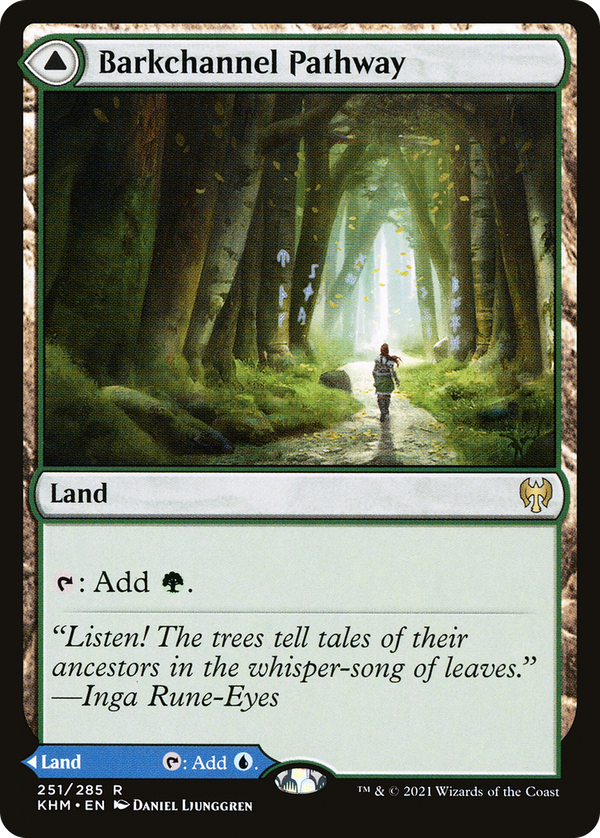
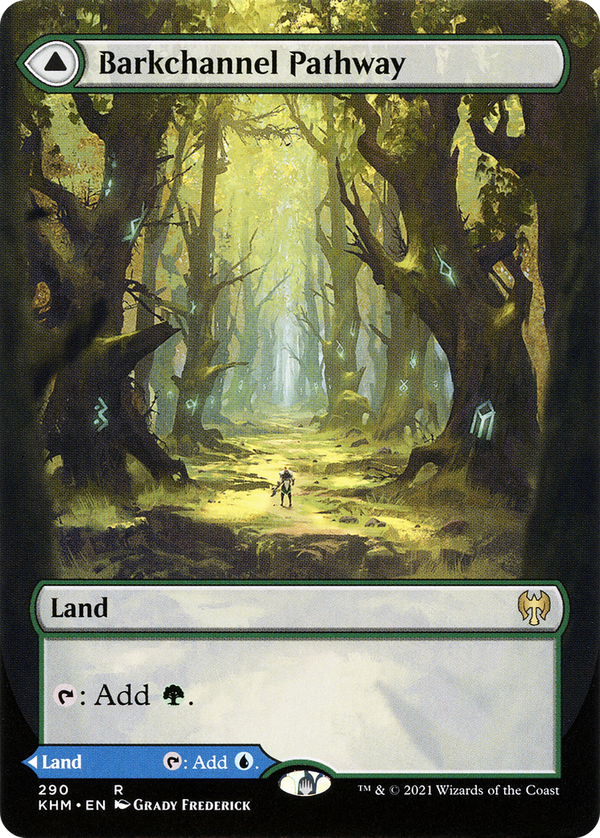
The cleverest thing modal double-faced lands do is smuggle a spell's decision-making into the manabase. Every dual land before this cycle asked a builder to accept a fixed cost for fixed flexibility: a shockland taps for two colors but pays two life on entry, a check land needs a basic type online, a tapland surrenders a turn. This pays with color yield instead. Each face produces exactly one color, so the choice happens when you play the land, after you have seen the board and read your hand, and either side enters untapped. That single-color output is what the design trades against fixing: it is not a dual at all, but two monocolored lands stapled back to back, and you keep only the one you pick. The payoff is a land that never rots in the opening hand. The classic dead-card problem (holding your off-color source or a color-screwed basic when you needed the other) evaporates, because the pick is deferred to the moment of play. The tradeoff is pointed: no card advantage, no fixing beyond that single choice, and once one side hits the battlefield the other is gone for good. The design reframes flexibility as an information problem rather than a rate problem, leaving your life total and your tempo untouched. For a Simic-colored pair, Barkchannel and Tidechannel do the quiet work of making a two-color deck feel like it drew the right basic every time.
Rules text
 : Add
: Add  .
//
: Add
.
//
: Add  .
.