Aurora Awakener


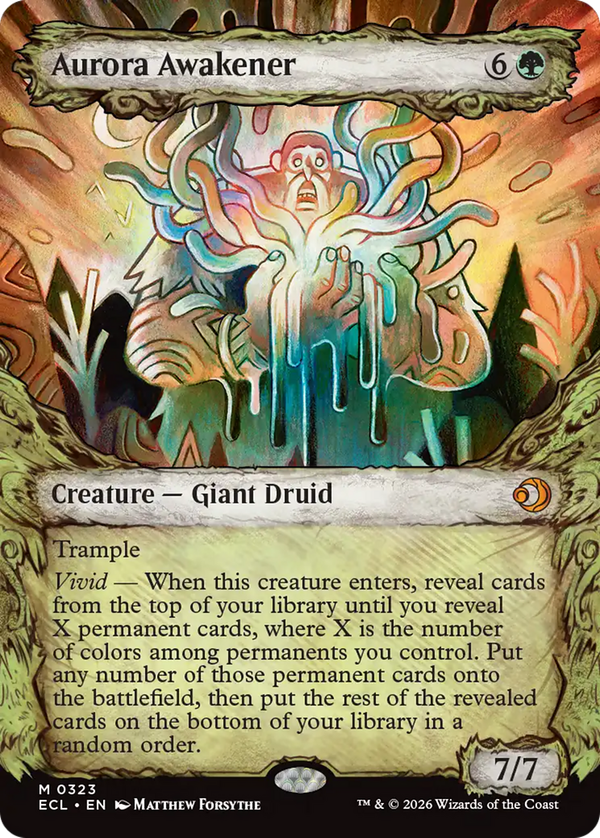
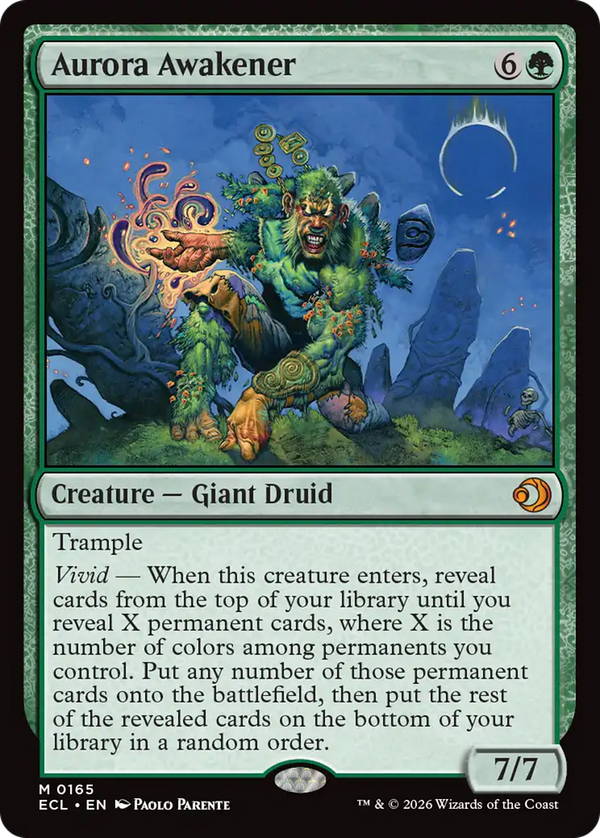
Vivid pays out exactly as wide as your board is colorful, and that constraint is the whole design conversation. The reveal digs until it finds a number of permanents equal to the colors among permanents you control, so a mono-green board built to cast this cheats itself: one color, one permanent, a single hit. The card wants a spread of colors already in play before it lands, which inverts the usual green-ramp instinct of flooding the battlefield with same-color mana dorks and fatties. Get four or five colors going and the reveal becomes a genuine board-doubling event, since you keep any number of the permanents you find and bottom the rest without cost. That tension (a green seven-drop that rewards the least green thing you could be doing) is the interesting part. The 7/7 trample body is just the floor: a fine payoff for the mana on its own, but the Vivid trigger is where the deckbuilding math actually lives. It reads as a top-end payoff for a five-color permanents deck that has spent the earlier turns diversifying its board rather than building a mana engine, and the random-bottom clause keeps it honest as a one-shot: what you fail to put onto the battlefield goes away, so there is no shuffle-and-retry, only the snapshot of colors you managed to assemble before it resolved.