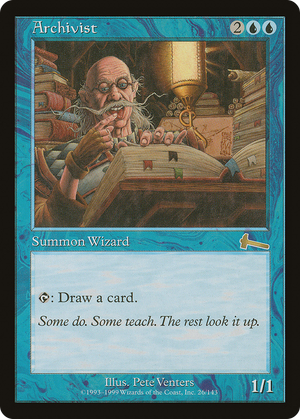
Archivist


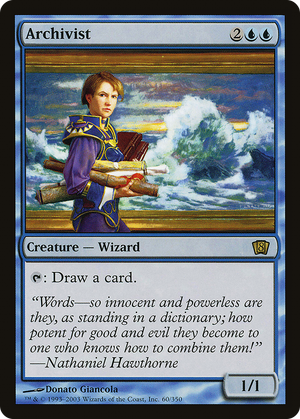
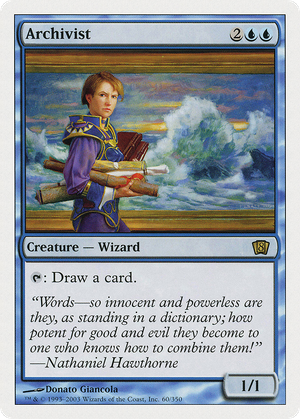
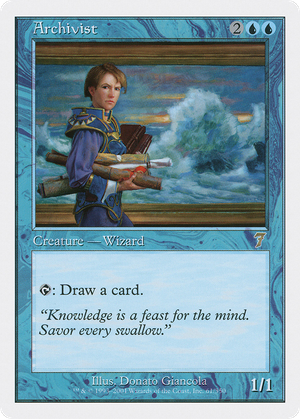
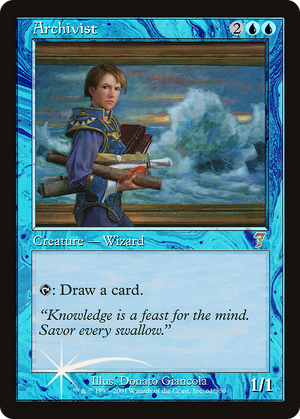
Tap a 1/1 for a card, no cost, no commitment, every turn until someone removes it. The catch is the body: a four-mana investment that draws nothing on arrival and folds to the first thing pointed at it. That tension between a runaway engine and a glass jaw is the whole design. Tapping artifacts had been pulling this trick since the early sets, but stapling the engine to a creature put it in range of every burn spell, every bounce, every chump-block-and-trade math problem, which is exactly how Wizards justified handing out repeatable, free card advantage on a permanent. Survive a rotation of the turn cycle and you bury the opponent; the design pays you for the turns you keep it alive rather than the cast itself. It set the template for the tap-to-draw creature that later wizards inherited and refined: the same ability priced against a sturdier shell, or gated behind extra mana, or tied to a payoff that justified the slow start. Here the answer was the cheapest possible: a single point of toughness, summoning-sick on entry, betting that an unanswered draw engine is worth a frame that forces a removal spell to be spent breaking it.
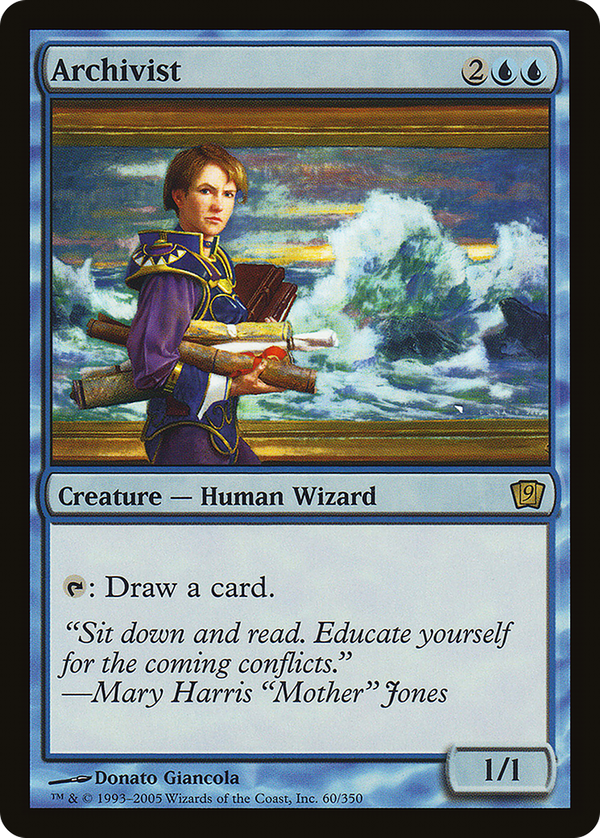
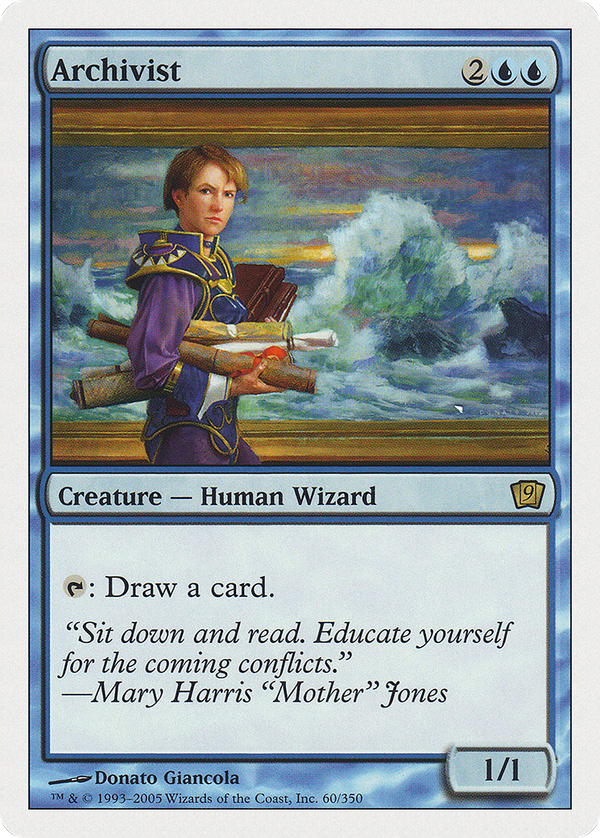
Rules text
 : Draw a card.