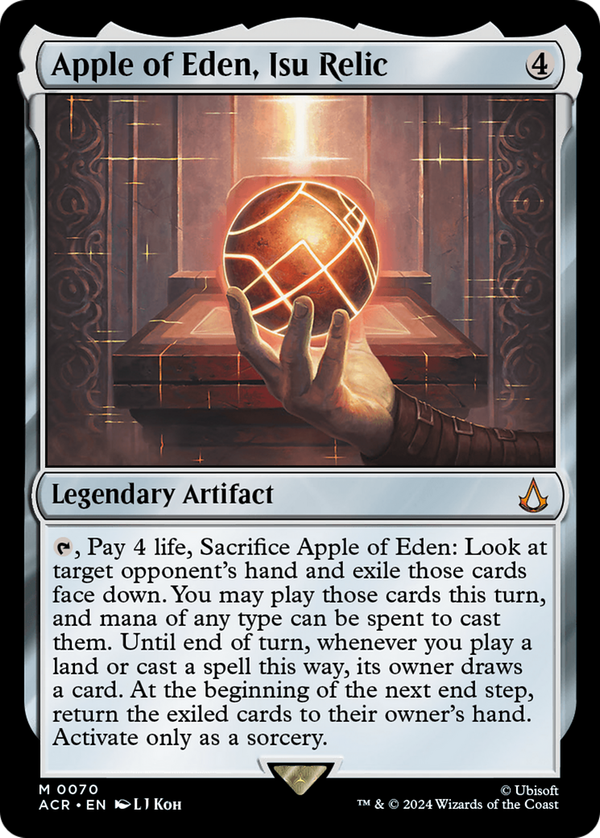
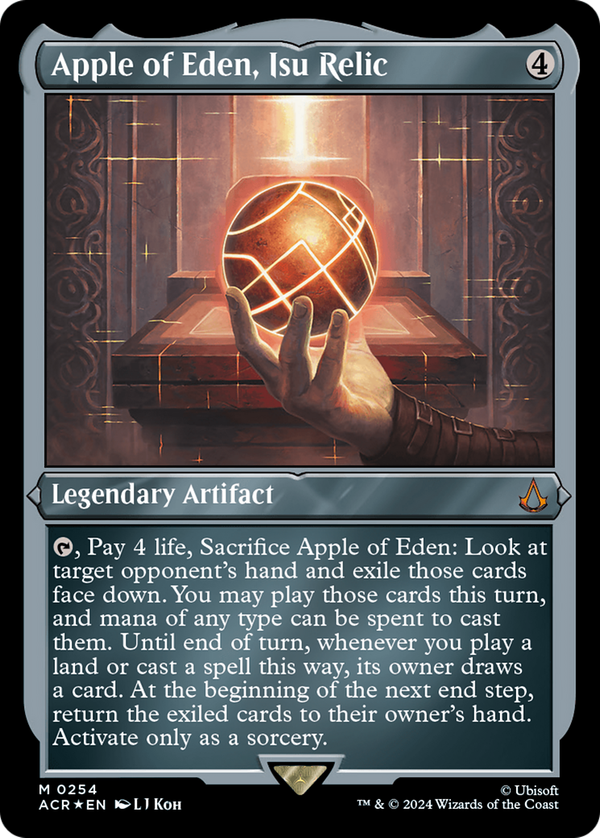
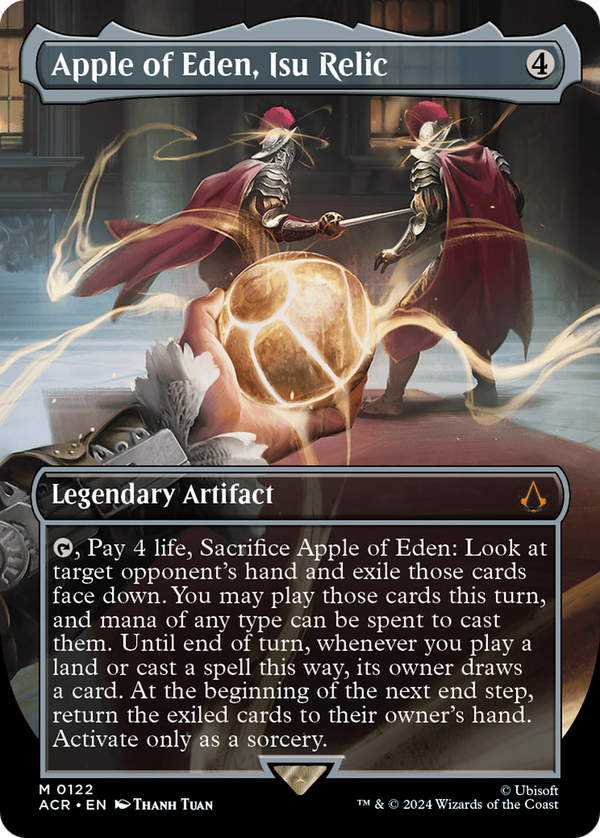
Apple of Eden, Isu Relic

Steal-the-hand effects usually pick one card and pay dearly for it; this one takes the whole grip and then hands the tax back to the victim. The activation empties an opponent's hand into face-down exile, fixes the mana so color is never a barrier, and hands you a turn's worth of borrowed spells and lands (subject to the normal one-land-per-turn rule, so the grip's lands mostly do not all hit the board). The costs on your side are steep and immediate: tap, four life, and the artifact itself, a one-shot gone the moment you activate it. But the real design tension lives in the give-back clause, which turns a strictly extractive effect into a wash. Each thing you play from the stolen pile draws its owner a card, so you are not stripping resources so much as borrowing them at interest: playing the opponent's turn for them and paying for every spell you cast. The temporary window is the whole mechanism. Anything you do not use returns at the next end step, and the opponent refills off your greed. That structure rewards a board or a combo already assembled, where a ritual and a spell chained out of the stolen hand close the game before the drawn cards matter, and it punishes the player who fires it hoping the borrowed grip alone will bail them out. It asks whether you can convert one turn of another player's cards into a kill or a lock, because if you cannot, you have paid four life to help them draw.
Rules text
 , Pay 4 life, Sacrifice Apple of Eden: Look at target opponent's hand and exile those cards face down. You may play those cards this turn, and mana of any type can be spent to cast them. Until end of turn, whenever you play a land or cast a spell this way, its owner draws a card. At the beginning of the next end step, return the exiled cards to their owner's hand. Activate only as a sorcery.