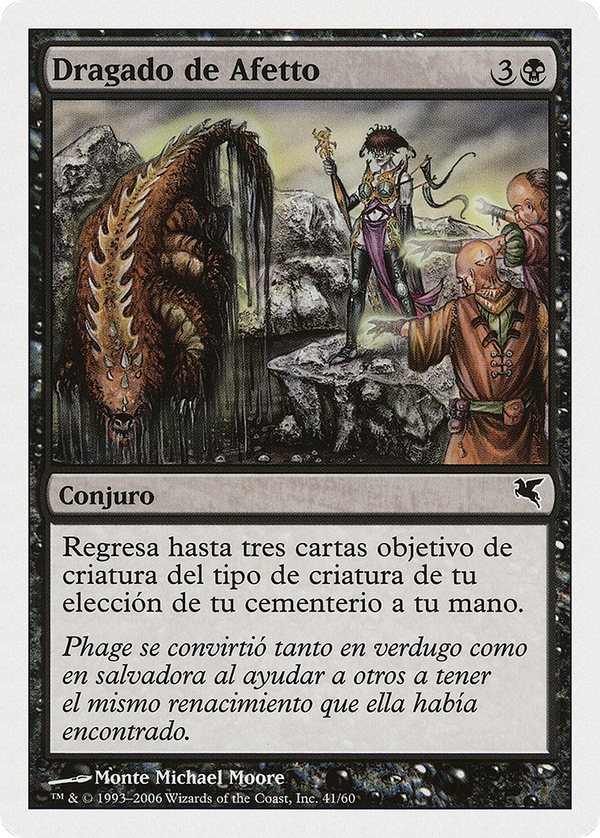
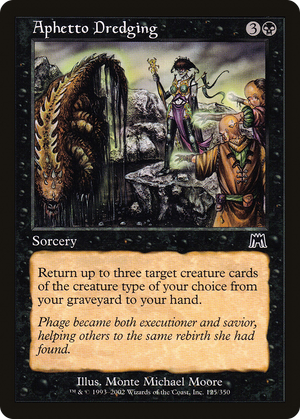
Aphetto Dredging


Three creatures back from the graveyard for four mana looks like a bargain until you read the constraint that prices it: they must all share one creature type you name. That clause is the whole design. Generic mass recursion is nearly impossible to cost fairly, so the count is leashed to a tribe: three Goblins or three Soldiers come back together, while a deck spread across unrelated bodies barely gets one card out of it. The reward scales precisely with how committed a list is to a single type, which is exactly the kind of payoff that early tribal blocks were built to dole out. Sorcery speed reinforces the role. This is not an end-of-turn ambush but a rebuilding spell, cast after a sweeper has emptied a board and salted the graveyard with bodies of one kind, then reloading the hand to do it again. Because it returns to hand rather than to the battlefield, it rewards attrition decks that spend creatures cheaply and recast them in bulk more than it rewards any single high-value reanimation; you reclaim the cards, but you still have to pay for them. The result is an engine piece that is generous to the deck meeting its condition and close to dead in any list that cannot name a type and find three cards on it.