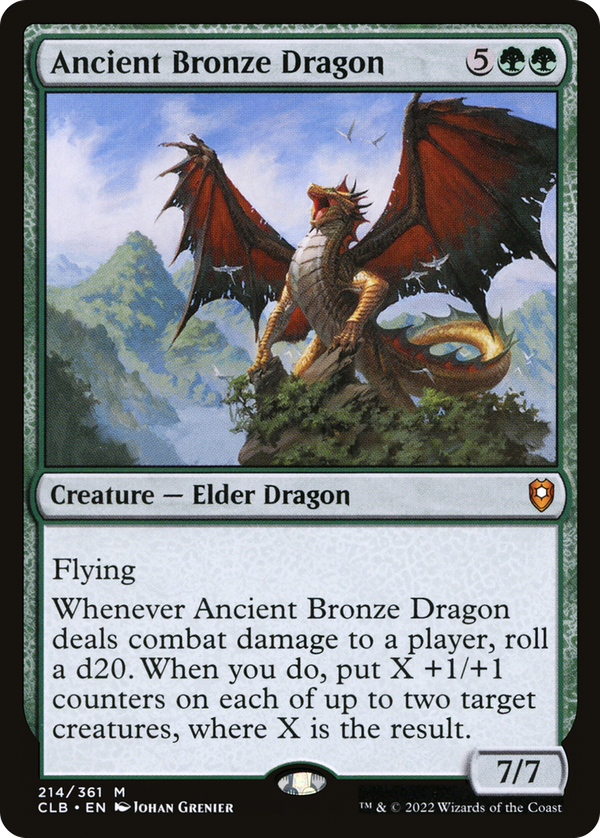
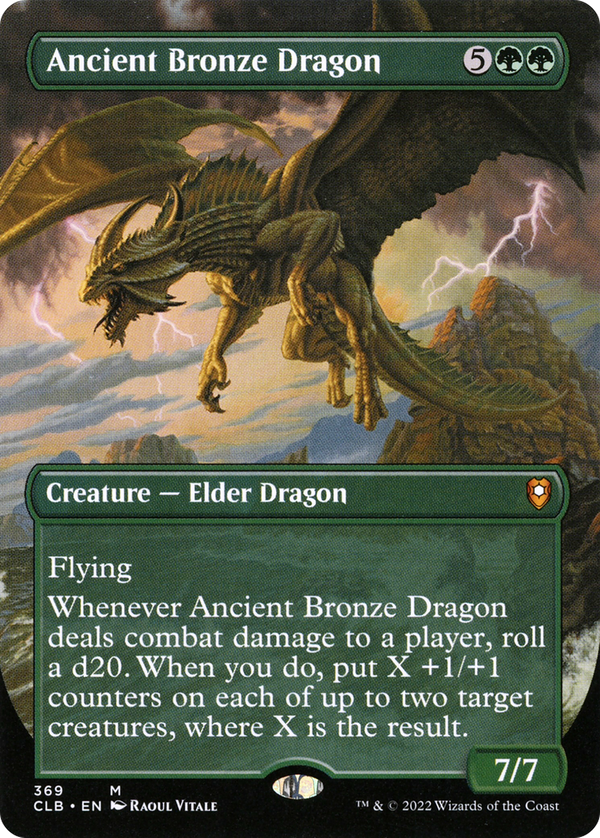
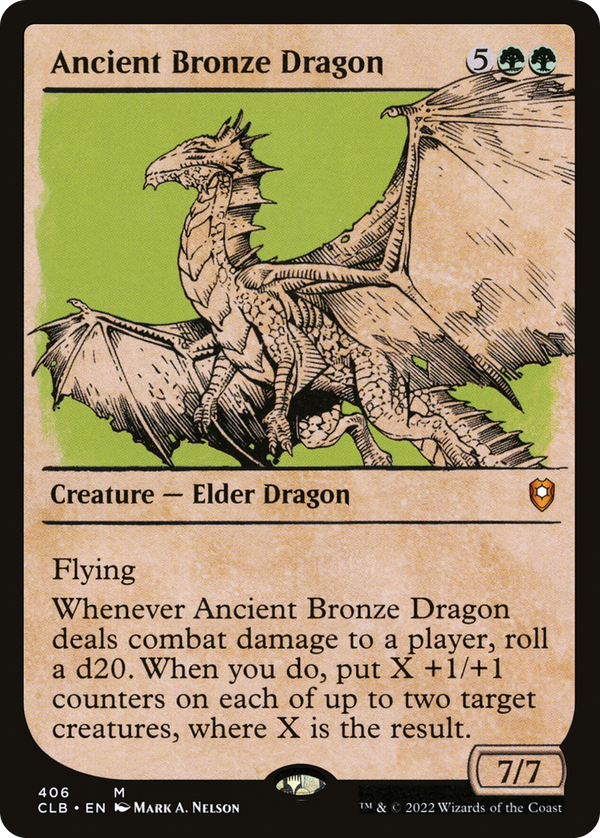
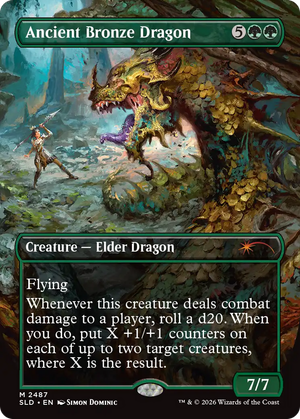
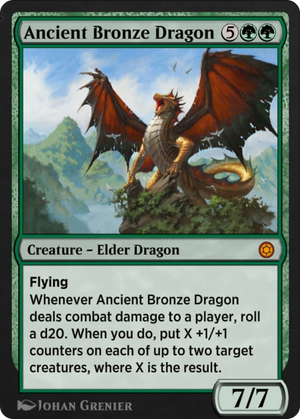
Ancient Bronze Dragon


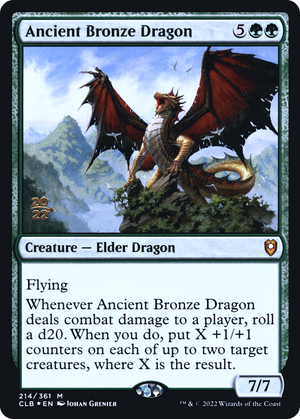
The die roll is the whole point, and it lands in the least random place possible: on the back of a 7/7 flyer that has already connected. By the time you're rolling the d20, the combat math is over; the dragon hit, the trigger is on the stack, and the only question left is how much bigger the board gets. That sequencing keeps it clear of the coin-flip and chaos cards that gamble on whether anything happens at all. Here the payoff is guaranteed and only the magnitude varies, so even a low roll fattens two creatures and a high one buries an opponent under twenty-plus counters split across a pair of bodies. The +1/+1 counters are permanent, which turns a single unanswered swing into a runaway threat that keeps growing every combat: a snowball engine dressed as a dice game. Green's counter-doubling and proliferate effects push the numbers into absurd territory, and the two-target clause lets the payout dodge a single removal spell by spreading across creatures. The design honesty is that all of it is gated behind connecting for combat damage with a seven-mana ground-and-air threat; nothing triggers from the stack, from a sacrifice, or at instant speed. You have to attack, and you have to get through, and the reward for doing both is a roll of the dice that only ever helps.