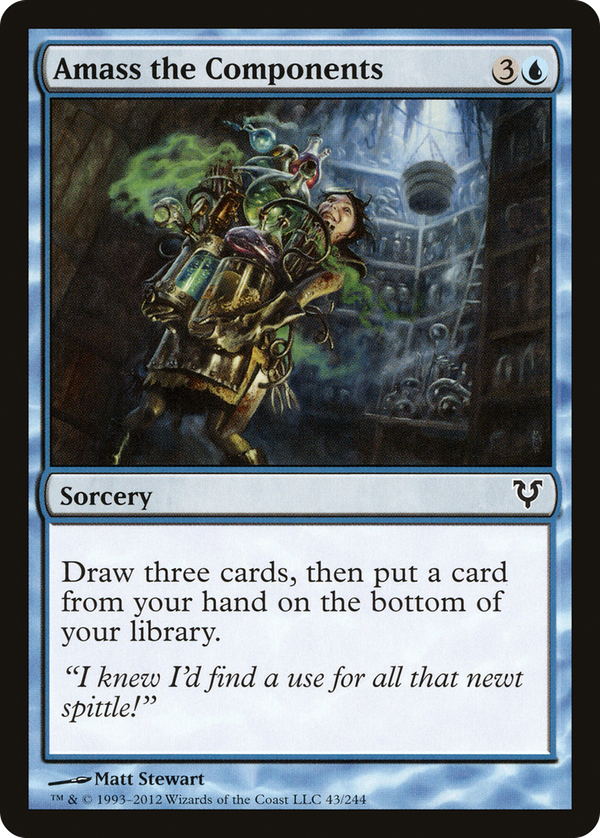
Amass the Components


The price of seeing three cards is that you keep only two, and that single clause separates this from the refill spells it superficially resembles. Cast it and you spend one card to draw three, then send one to the bottom of your library: the net is one card ahead, exactly the same ledger as Divination, but arrived at through a wider window. That gap between what it shows you and what it leaves you with is the whole design. You get to survey four candidates (the three you draw plus the worst card already in hand) and bury the one you least want, which turns a flat draw-two into a selection effect. The bottom-of-library placement is doing real work: a card tucked there is gone until the deck has nearly emptied, so this is smoothing, not pure accumulation. It belongs to the long blue tradition of paying mana for hand quality rather than raw quantity, the line of effects that fix what you hold instead of padding a card-count line. The sorcery speed and four total mana keep it off the tempo axis entirely; this is a deliberate main-phase dig for a deck that wants to find specific answers, not one trying to pull ahead on resources alone.