Accumulated Knowledge


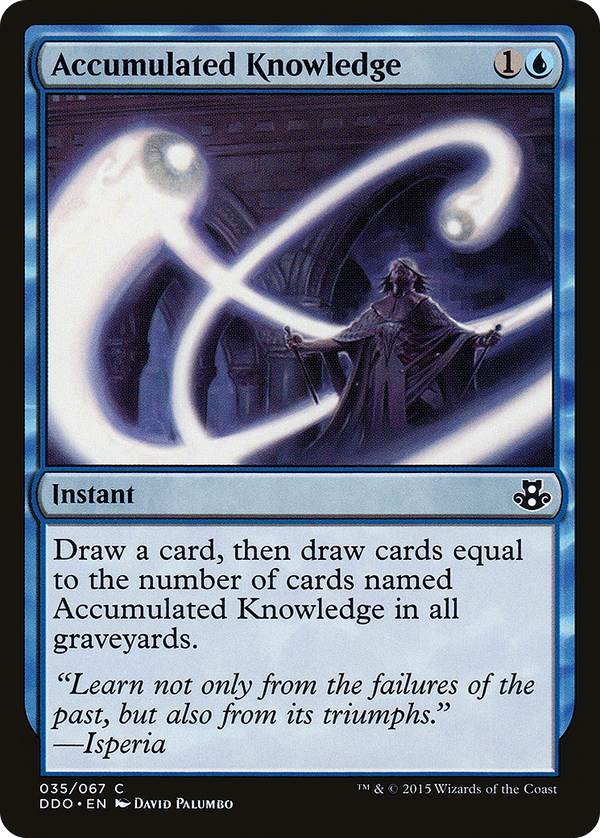
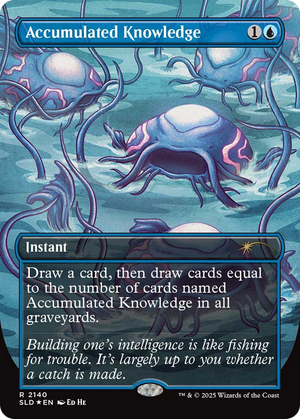
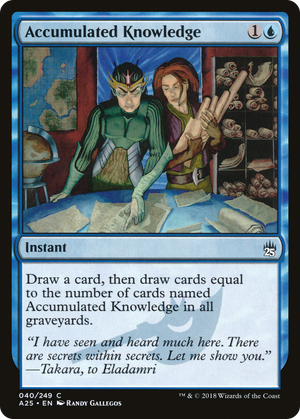
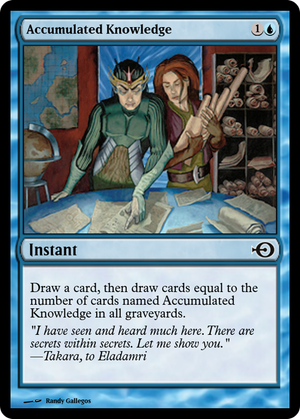
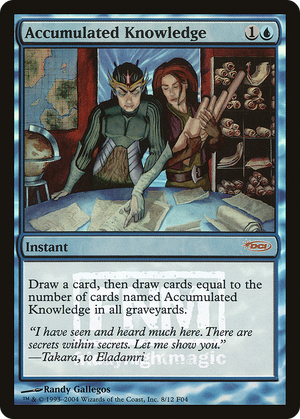
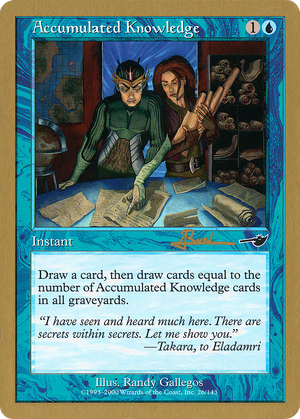
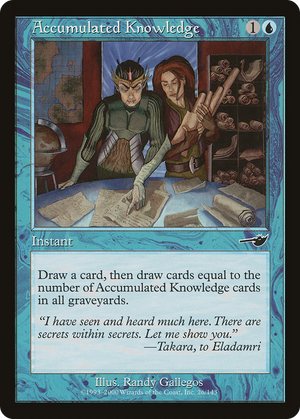
The first copy you cast is a slightly overcosted cantrip; the fourth is a four-card dig. That escalation is the whole point, and it reverses the usual relationship between card draw and redundancy: most cantrips get worse the more you draw of them, but each copy resolved here seeds the graveyard so the next one draws harder, turning a playset into a self-amplifying chain where the final spell pays out a fistful of cards. The clever wrinkle is the count clause: it tallies copies in all graveyards, not just yours, so a mirror where both players are slinging the same instant balloons the draw for whoever fires last. The deckbuilding instruction is unusually blunt: run all four, and do not flinch at casting the early ones into a low count. Spending the first copy for a single card feels bad in isolation, and that friction is precisely the price the design charges for the back-loaded payout. It is what separates this from a flex slot you splash one of; the math only works when you commit to the full set and trust that you will, eventually, draw your whole chain. A pure value engine built on the premise that the worst version of itself you ever cast is the very first one.