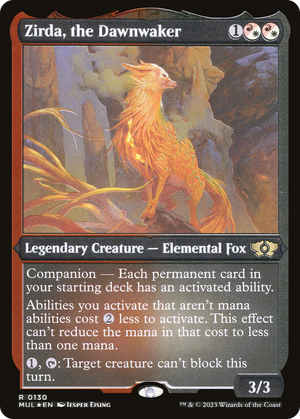
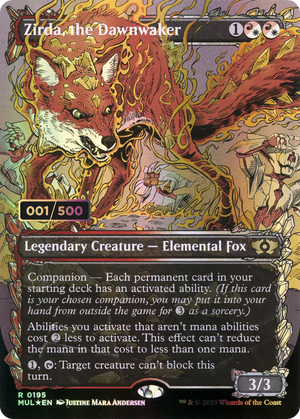
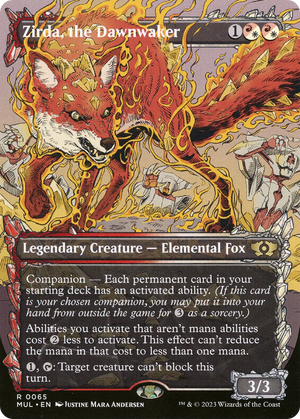
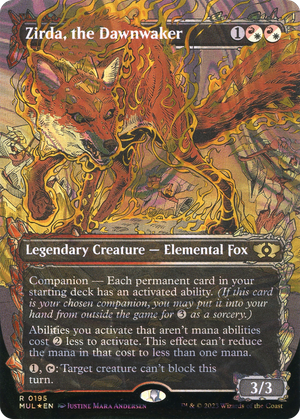
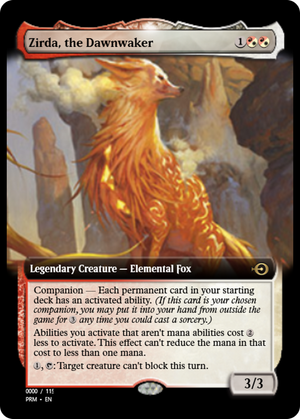
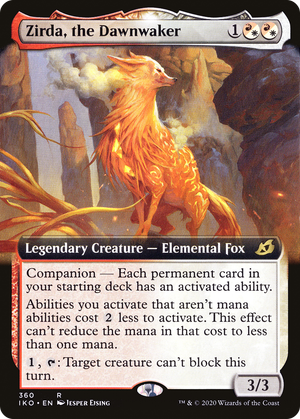
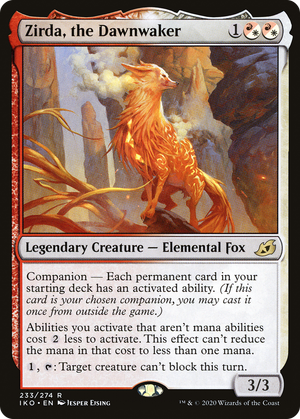
Zirda, the Dawnwaker


The companion clause reads like a downside, but it functions as a construction rule: it filters your deck down to permanents that each carry an activated ability, which is precisely the shell that wants the second line of text. That cost reduction is the payload. Two generic mana off every non-mana activated ability, with a floor of one mana so nothing goes entirely free, turns activation-heavy decks from grindy into explosive. The infamous case exploited that floor precisely: certain artifacts carry a non-mana untap ability, and shaving two mana off the cost to untap them lets each untap generate more mana than it consumes, so the fox became half of a two-card infinite-mana loop notorious enough to draw a ban. The reduction is agnostic about intent, and that generality is the point. Equip costs, level-up abilities, any repeatable non-mana activation gets cheaper the moment this is on the battlefield, which is why the ban worried less about the specific loop than the principle: the reduction touches anything that charges mana to do something twice, and it does not care what that something is. The evasion ability stapled to it is almost an afterthought, a way to convert a wide board into damage, but the design gravity is entirely in the reduction. It rewards you for building the deck it demands, then quietly breaks the math of every repeatable ability in it.
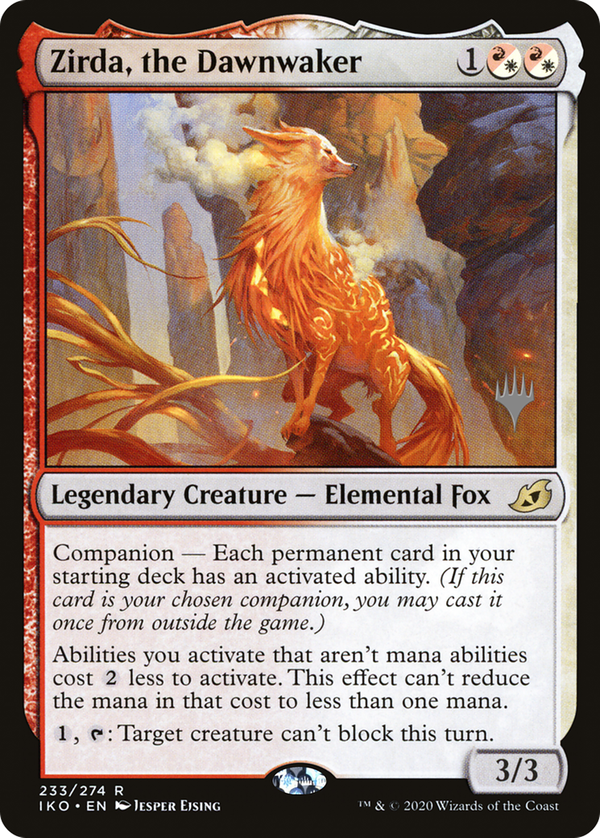
Rules text
 as a sorcery.)
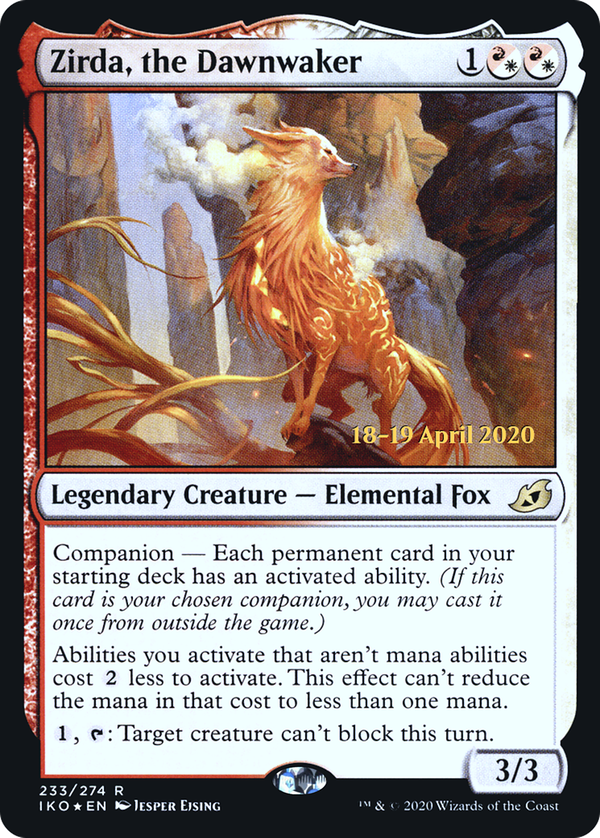
Abilities you activate that aren't mana abilities cost
as a sorcery.)
Abilities you activate that aren't mana abilities cost  less to activate. This effect can't reduce the mana in that cost to less than one mana.
,
less to activate. This effect can't reduce the mana in that cost to less than one mana.
,  : Target creature can't block this turn.