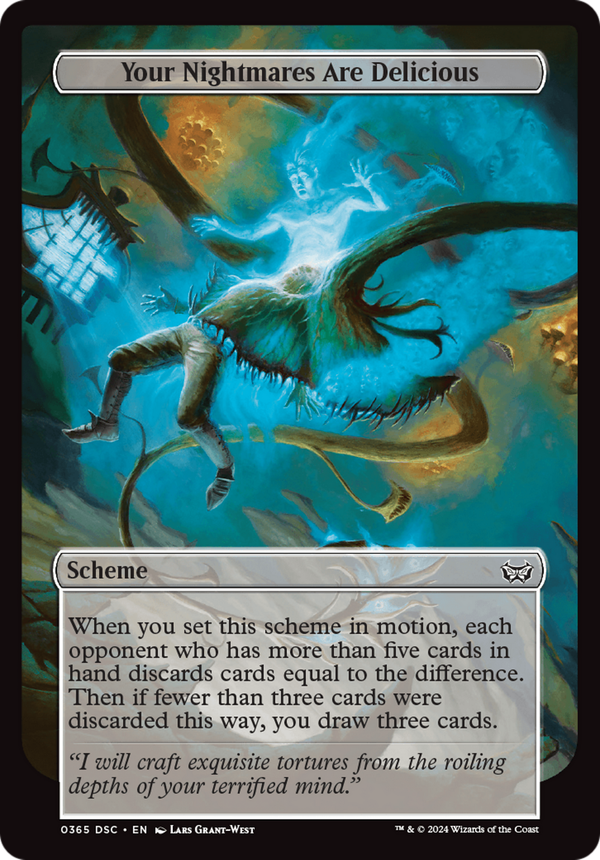
Your Nightmares Are Delicious
Most schemes throw a single blunt hammer at the whole table; this one splits its aggression along a self-correcting axis and pays out on whichever side of the board is starved. The discard clause only bites opponents genuinely flooded, taxing exactly the surplus over five and nothing more, so a table already reeling or hellbent gives it little to grab. That restraint is what arms the payoff: when hand sizes are lean and the scheme claws back fewer than three cards, the drought becomes your own refuel, sliding three fresh cards into your grip instead. Against a durdling, card-hoarding pod it works as targeted attrition aimed at the biggest offenders; against a fast, empty-handed one it quietly converts into a free draw. The "difference" wording is doing the balancing here: it never empties a hand or mills anyone, it only trims the excess, which makes it a governor on late-game card advantage rather than a tempo swing. It belongs to the strain of villain designs that reward reading the room: patience against greedy opponents, self-sufficiency against fast ones, and no dead trigger against either.