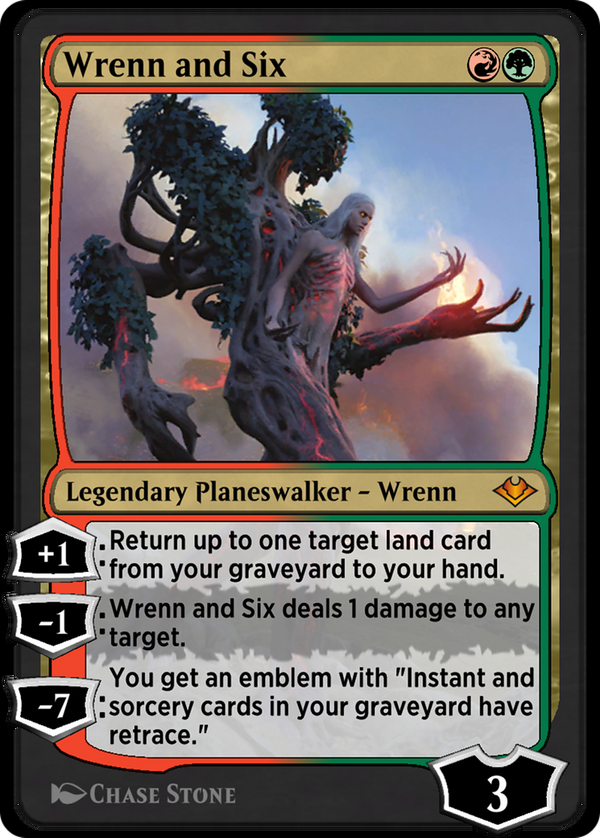
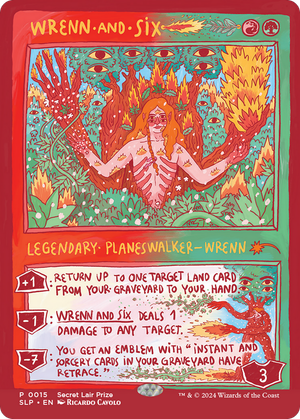
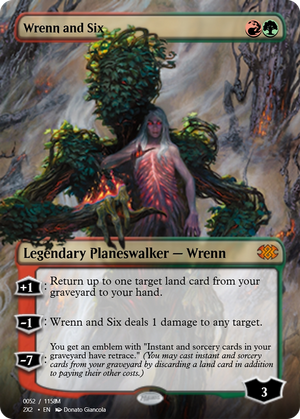
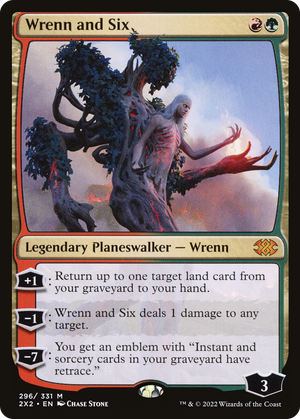
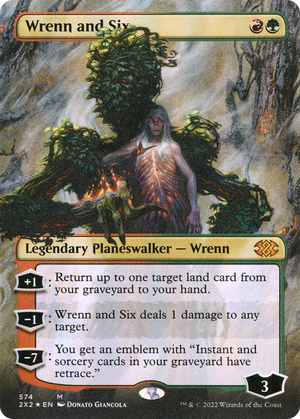
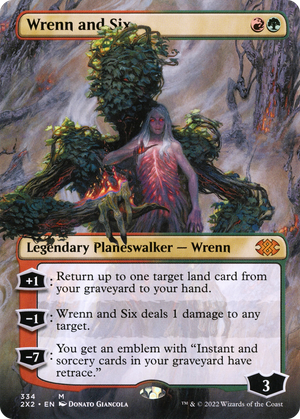
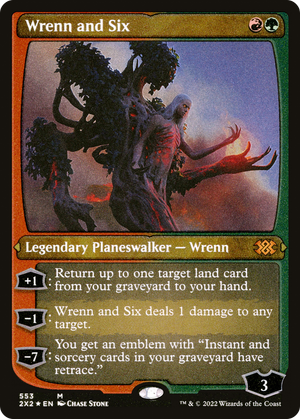
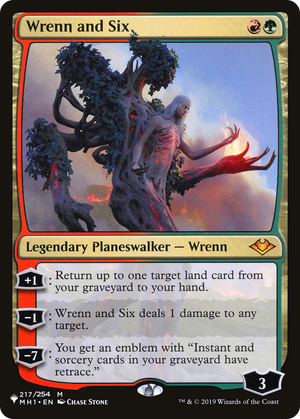
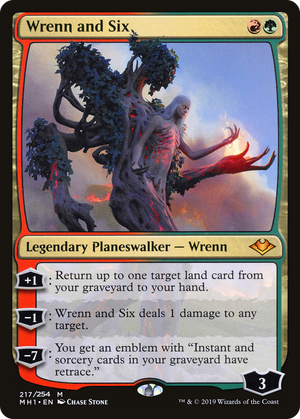
Wrenn and Six


Two mana for a planeswalker that generates advantage the moment it resolves was the sharp edge of the design. The +1 costs nothing in card economy: it hands back a fetchland or a manland from the graveyard, protects loyalty while it does so, and quietly turns every land in the yard into a recurring draw step. The minus is where the abuse lives. One damage to any target reads as trivial, but consider what it reaches: it chips a planeswalker down every turn, snipes a one-toughness engine off the board, or keeps a low-loyalty walker from ever sticking, all while the +1 rebuilds the loyalty the minus spends. Both abilities run at sorcery speed on your own turn, so the engine is a grind rather than an ambush. But because loyalty abilities fire the turn a walker enters, a two-mana permanent starts paying out immediately and answers the exact cards it cares about. That was the math problem: the front end is priced like a spell, the back end pays out like an engine, and the two rarely trade against each other. The ultimate is almost a footnote; any game that reaches minus seven with retrace on your instants and sorceries was already decided by the ping-and-recur loop underneath it. The value lived entirely in how cheap the front end was, and how little the back end ever needed to matter.