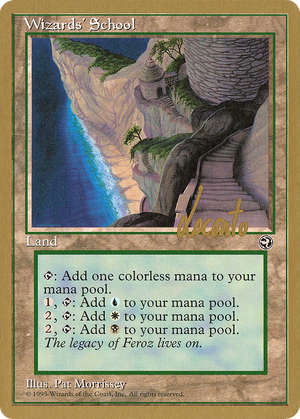
Wizards' School
The structure is a tax curve dressed up as a tri-land: colorless comes free, blue costs an extra mana filtered through the tap, and white or black demand two extra mana beyond it. By the time you pay for the third color you have sunk two mana total into a single off-color symbol, which means the land actively punishes you for needing what it nominally offers. Compare the rate to the dual lands that already existed when this printed, lands that simply tapped for either of two colors at no cost, and the design reads as a deliberate (if misjudged) attempt to price fixing by how greedy your manabase was. The colorless option is the tell: it exists so the card is never strictly dead, a floor beneath a ceiling almost no deck wanted to reach. What it represents is the era's uncertainty about how much fixing should cost, before templating settled into painlands, fetchlands, and the clean enters-tapped trilands that followed. The card is a fossil of that experiment: a land that could ask you to pay mana, repeatedly, for the privilege of casting your own spells.
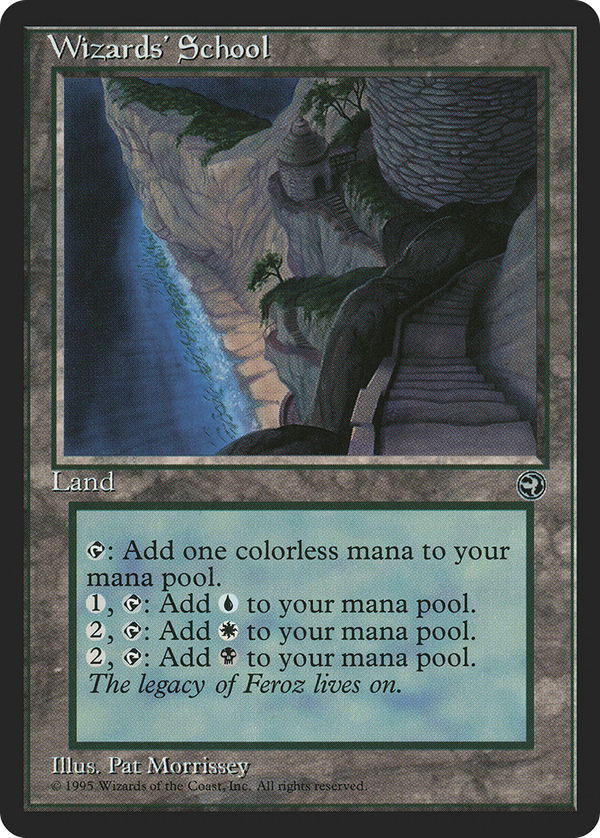
Rules text
 : Add
: Add  .
.
 , : Add
  .
.
 , : Add
  or
or  .
.