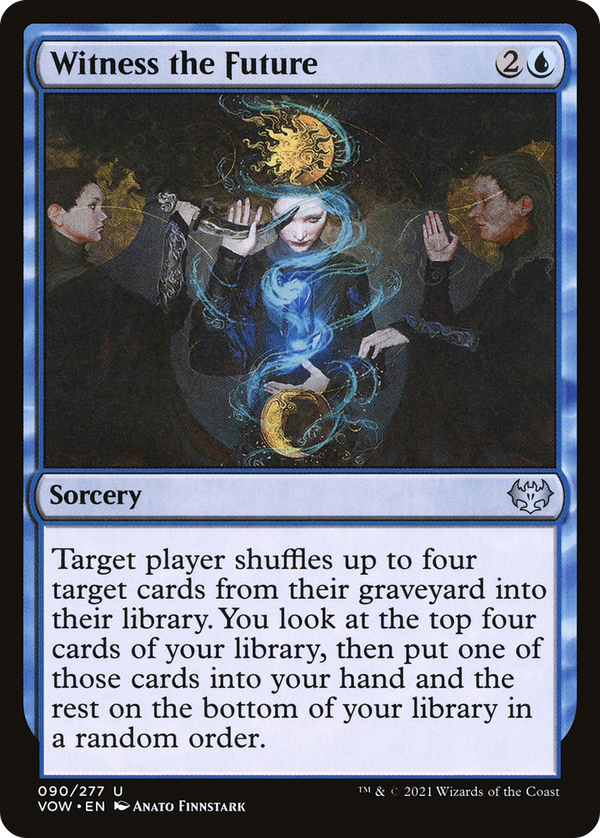
Witness the Future


The recursion-plus-selection template goes back a long way, but most versions serve one master: you shuffle your own graveyard back and dig for the piece you need. This one cleaves the two halves across different players, and that separation is what makes it more than a familiar blue smoothing effect. The shuffle clause targets a player, not you specifically, which means the recycling can be pointed at an opponent's graveyard as easily as your own: a soft, symmetric hedge against reanimator and delve strategies that buries the tools they most wanted to reuse in the middle of their library. The second half is unconditionally yours, a look-four-take-one dig that operates independently of who got shuffled. The tension is that these two halves rarely want the same target on the same turn. The dig is card-parity smoothing (you spend this to trade for one specific card deeper in your deck); the graveyard reset is diffuse, board-agnostic interaction that touches someone else's plan entirely. So you cash it for the selection and treat the shuffle as incidental, or you fire it as graveyard hate and take the dig as consolation. Sorcery speed keeps the interaction honest, denying the end-of-turn shuffle that would let it snipe a reanimation target off the stack. It is a modest, deliberately two-directional read on a well-worn blue effect, built for a table where graveyards matter to more than one seat.