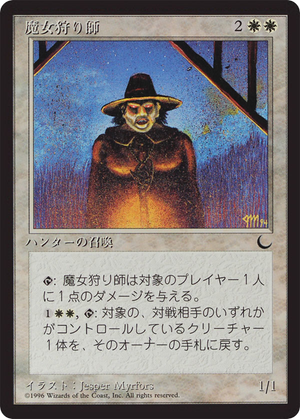
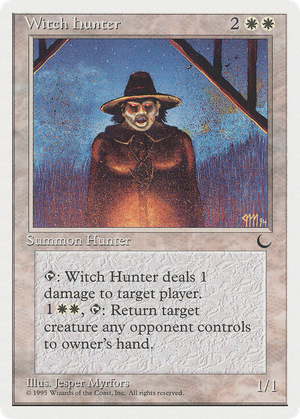
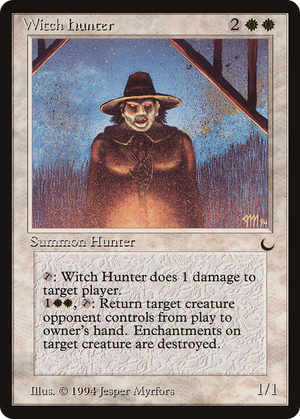
Witch Hunter


A pinger and a bounce engine stapled to a body too fragile to survive the trade. The first ability is the classic tapper-as-clock: a point a turn to the face, no creature targeting, which makes it a slow attrition tool rather than a removal piece. The second ability is where the design intent lives, because returning an opponent's creature to hand is a tempo lever that early white rarely had access to. The tension is the activation cost:  plus the tap means the card commits to one job per turn, and a 1/1 that taps to bounce is asking to be killed in response by anything. Both abilities carry no timing restriction, so the card can answer a threat on the opponent's turn or tap in response to combat math, which makes the fragility sting more: every activation telegraphs the body's vulnerability and invites a kill in the window. This is white before efficient removal and reliable enchantment-based control were established as the color's board-interaction identity, when that interaction was deliberately kept clumsy and conditional. The card reads as a designer probing what a repeatable answer engine on a creature should cost in white, and landing on a rate that taxes mana so heavily the body never justifies the upkeep of protecting it. A relic of when utility creatures were priced to punish rather than enable.
Rules text
 : This creature deals 1 damage to target player or planeswalker.
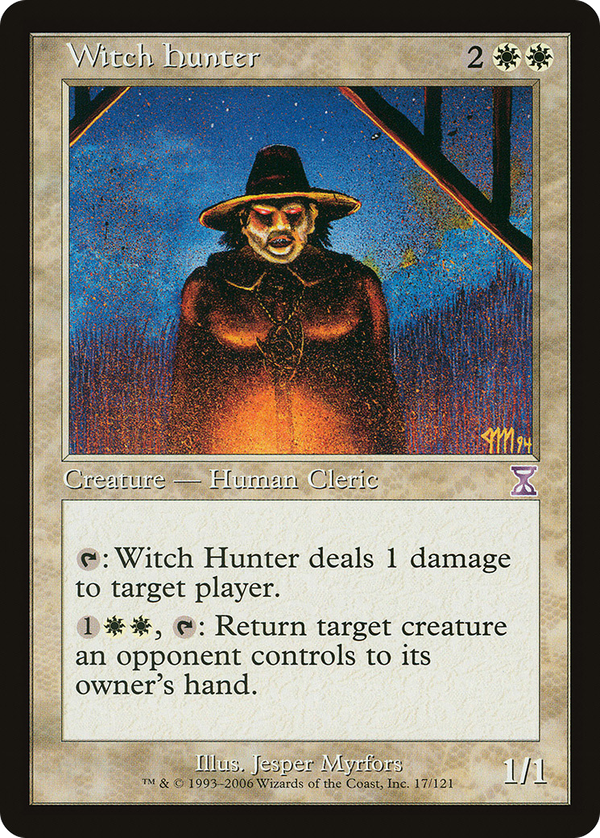
, : Return target creature an opponent controls to its owner's hand.
: This creature deals 1 damage to target player or planeswalker.
, : Return target creature an opponent controls to its owner's hand.