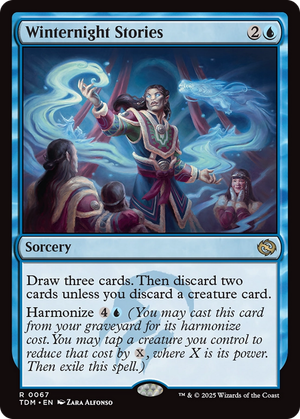
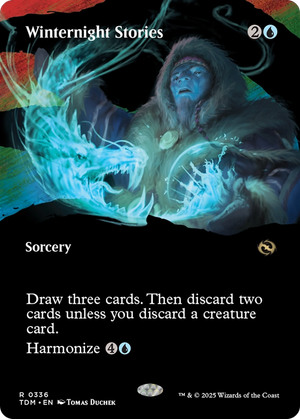
Winternight Stories


Draw three, then hand two back: the standard tax on cheap blue refills, the correction that stops a three-mana draw spell from being pure card advantage. The exemption is where the design turns: pitch a single creature and you keep two of the three, converting a break-even dig into a genuine net-positive one. That single clause pulls the card toward decks stocked with creatures they are happy to bin, which is precisely the same population Harmonize is built to reward. Once the sorcery resolves, it sits in the graveyard as a recastable object at  , and tapping a creature knocks the cost down by that creature's power: aim it at a large body outside combat and the recast collapses toward the base rate. Both halves are pulling in one direction. The front side pays you for a creature in the bin; the back side pays you for a creature on the board. A discard that dumps a creature into the yard also stocks the same board those decks are built around, and a creature you tap for the discount is one you were choosing not to attack with anyway. The discipline holding it together is timing: both the initial cast and the Harmonize recast are sorcery-speed, so there is no end-step ambush or instant-speed graveyard trick. You spend your main phase and your attackers up front, and accept the tempo hit as the price of a draw spell that refuses to stay in the yard.
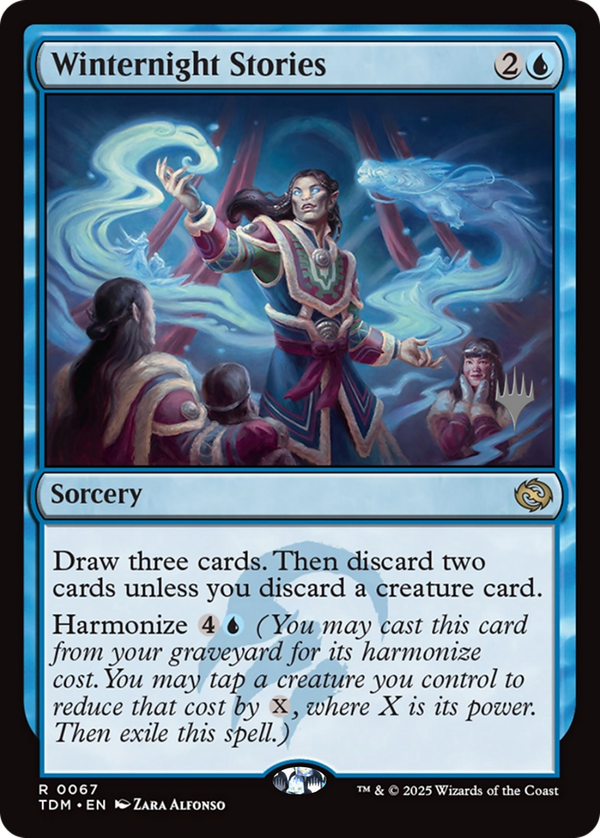
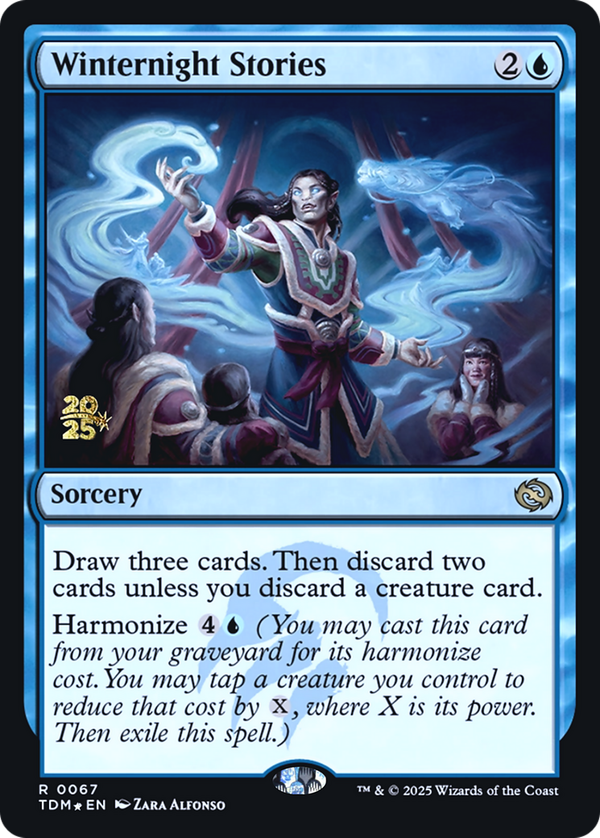
Rules text
(You may cast this card from your graveyard for its harmonize cost. You may tap a creature you control to reduce that cost by  , where X is its power. Then exile this spell.)