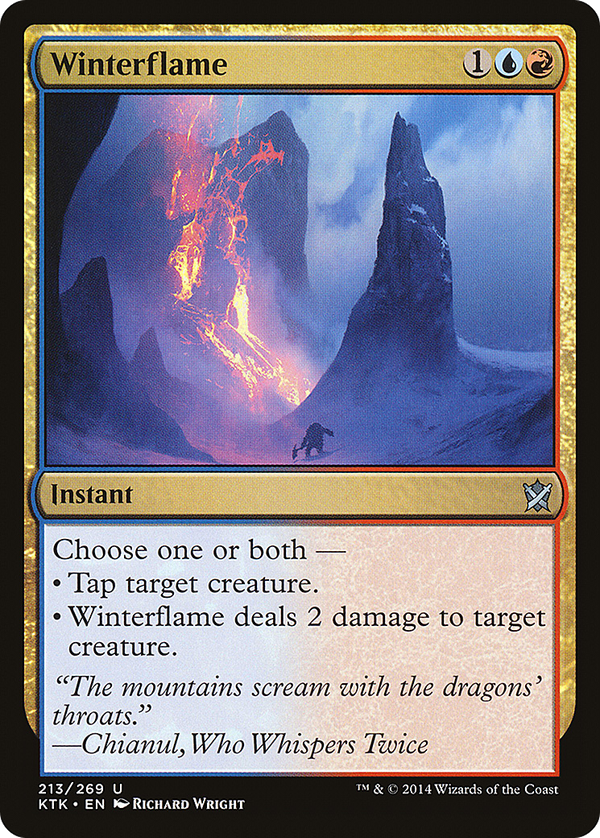
Winterflame



The optionality is the entire pitch: two clauses, two independent targets, and the freedom to fire one, the other, or both for the same cost. The value spikes when the two halves point at different creatures. Tap the oversized attacker so it cannot crash in, then send the two damage at the smaller threat beside it and kill it outright. That is a clean two-for-one in tempo terms, neutralizing one creature for a turn while removing another. Pointing both at the same body is usually the weaker line, because the damage half wears off when the turn ends the way all combat and burn damage does; tapping a creature you also dealt two to does not leave a lingering wound, it just buys a single turn and spends two damage for nothing. The split is what balances the card: two damage is a narrow ceiling that rarely finishes a real midrange threat on its own, and the tap clause defers a problem rather than solving it. So the gold cost buys breadth rather than power. Against an aggressive curve you have a burn spell; against a single fat blocker or attacker you have a way to step around it for a turn; against a board with both, you get to do a little of each. It descends from the two-color instants that ask you to pay into a second color for flexibility instead of efficiency, never the best tool for any one job but rarely a dead card either.