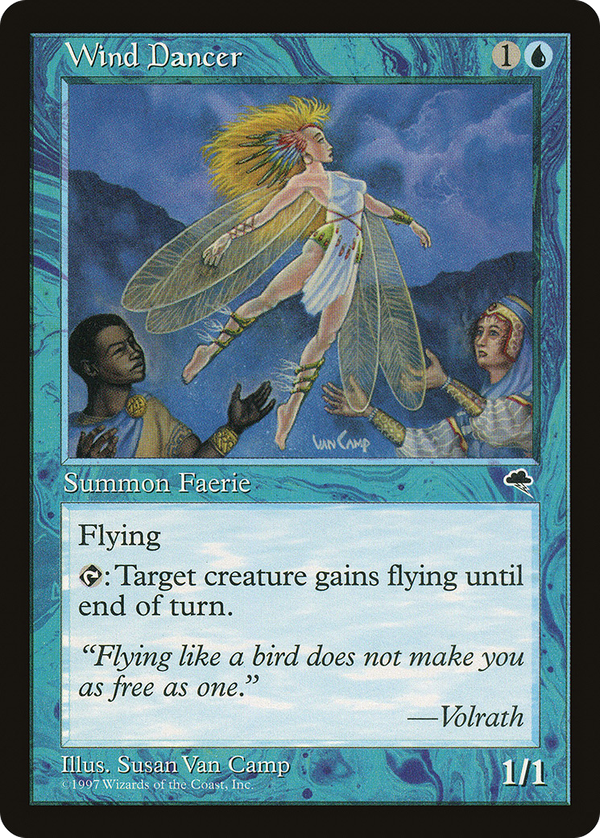
Wind Dancer


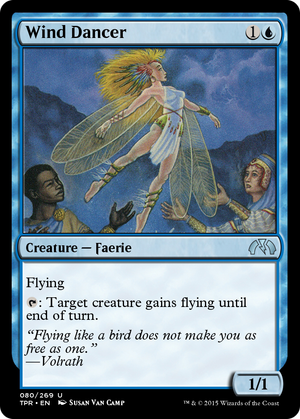
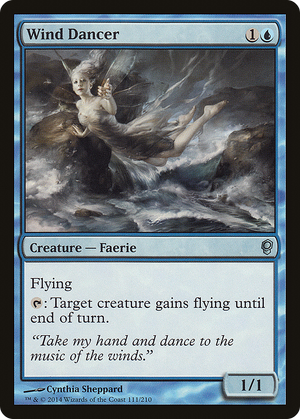
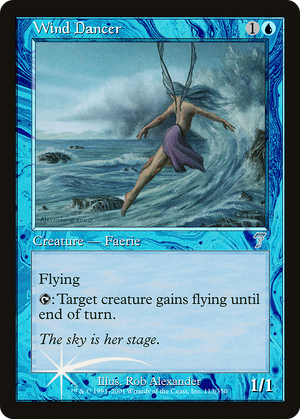
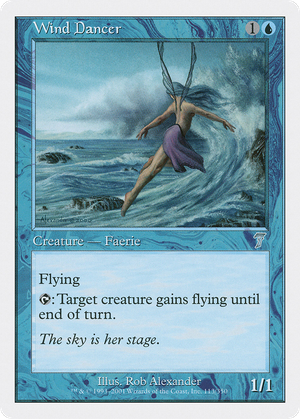
Blue, in this era, was supposed to own the skies without necessarily handing them out, which is what makes the design idea worth lingering on: evasion sold as a one-creature service rather than baked into a single attacker's printed text. The repeatable tap-ability does the structural work. A static enchantment like Levitation grants every creature flying as a standing deckbuilding commitment; a tap-to-grant on a single flier reads as an in-combat tool, deployed at instant speed during your declare-attackers step to pre-empt a likely block, or on an opponent's attack to send a ground creature into the air as a surprise blocker. The body is the price. A 1/1 taps to enable another creature rather than swinging meaningfully on its own, so the right frame treats it as a permanent that converts ground beaters into air, not as a clock. That framing also locates the friction: the ability needs to survive a turn to matter, and the flying must be granted before blocks are declared, since granting it afterward neither undoes a block nor unblocks an already-blocked attacker. A 1/1 with no protection is a soft target for any reactive removal that wants to deny you the tap. The Faerie type tag would later carry real archetype weight; here it is closer to flavor than function. What endures is the service model: evasion granted exactly when a combat math problem comes due.
Rules text
 : Target creature gains flying until end of turn.