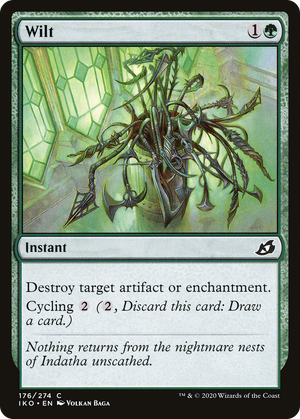
Wilt


Green's answer to the artifact-and-enchantment problem has always carried its own dead-draw tax: naturalize effects rot in your hand against opponents who never played a target. Cycling is the elegant fix. The two-mana discard clause converts the spell into a fresh card the moment the removal has nowhere to point, so a deckbuilder can maindeck a narrow answer without paying the usual opportunity cost. That structural choice, not the instant-speed destroy, is what lifts this above the long line of green artifact-and-enchantment removal that preceded it. The destroy itself is stock: unconditional, hitting either permanent type without a mana-value cap or a "if it's colorless" rider. The interesting design tension sits between the two modes. Cost the cycling too cheaply and the card collapses into a cantrip with a removal mode stapled on; cost it too high and the flexibility evaporates. Two generic mana lands it where cycling is a genuine floor rather than a plan, keeping the removal primary and the insurance secondary. The result is a spell that shapes how many copies a deck can safely run: because the worst case is drawing a card, the ceiling on maindeck copies rises, which is the quiet thing this template does to a format's answer density.
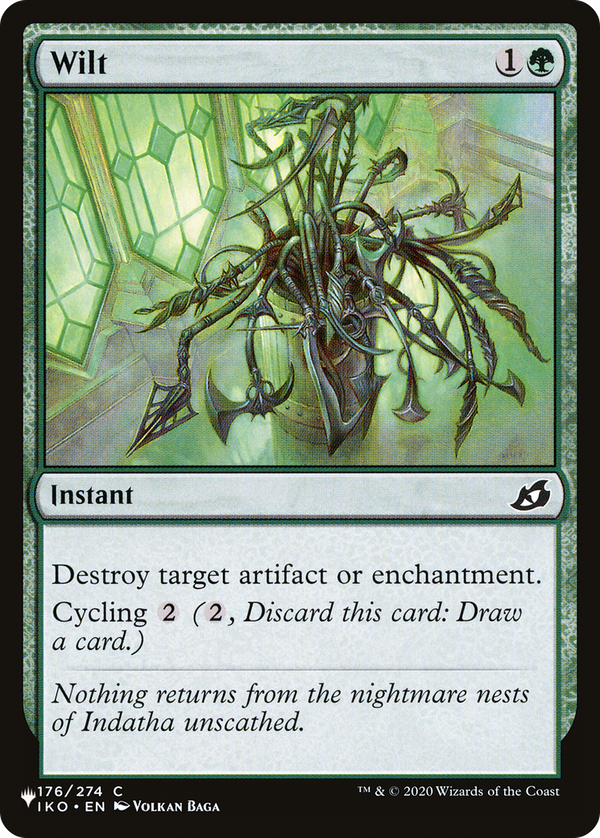
Rules text
 (, Discard this card: Draw a card.)