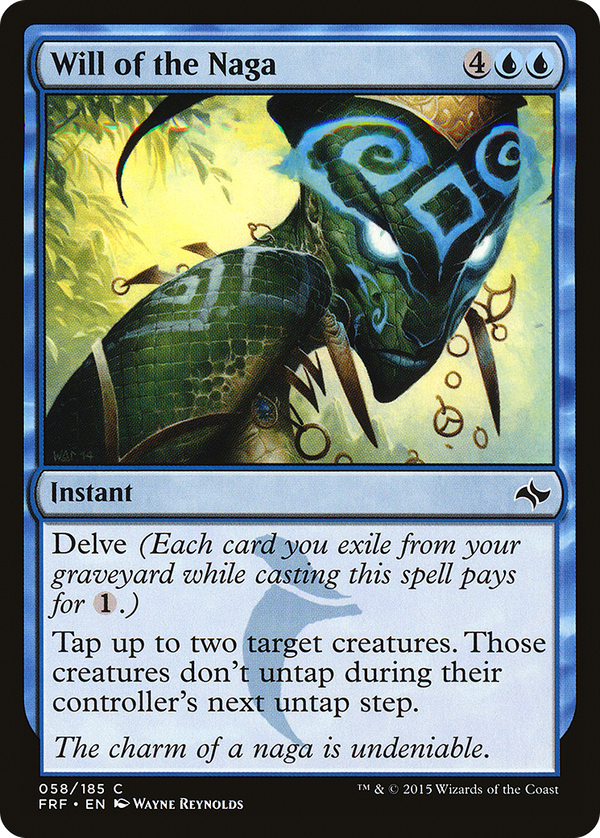
Will of the Naga


Delve is the lever that makes this otherwise overpriced effect interesting. The base spell is a six-mana double-tap that pins two creatures down through their next untap step: a tempo play that, at full price, almost never justifies the slot. But the graveyard pays the freight. Every card exiled shaves a generic mana off the cost, so a deck stocked with spent spells and fetched lands can land the tap-down for two or three actual mana at instant speed, turning it into a genuine combat and racing tool. The window matters more than the rate: holding it up means you can answer a swing-back, neutralize two attackers before damage, or strand a pair of blockers during your own alpha strike. Because the lockdown lasts through the opponent's untap, it functions as a one-sided fog spread across two turns rather than a single beat, buying a full cycle of tempo against the right board. The tension in the design is real: delve competes with every other graveyard payoff you would rather be fueling, so the cheaper you cast this, the more you have spent elsewhere. That is the cost the card never prints. Among the mass-tap effects that trade card economy for board control, this one is distinguished by letting you decide, mana by mana, exactly how much of your graveyard a single beat is worth.
Rules text
 .)
Tap up to two target creatures. Those creatures don't untap during their controller's next untap step.
.)
Tap up to two target creatures. Those creatures don't untap during their controller's next untap step.