Will of the All-Hunter


The whole trick here is the blocking clause, and it turns a routine two-mana pump into a spell that pays a premium for playing defense. Cast it on an attacker and the bonus is a temporary +2/+2, the sort of combat trick white decks have run a hundred times. Cast it on a blocker and the bonus stops being temporary: two +1/+1 counters that stick, so a chump block becomes a permanent trade-up and the survivor carries the growth into its next attack. That asymmetry rewards patience. The card wants you to hold up the mana, let the opponent commit the attack, and answer with a defensive stance that pays interest rather than spending it proactively where it does the least. Cycling is the escape hatch that keeps it from ever being dead: when the board is empty or the pump is redundant, discard it and draw. That combination (a payoff for defense plus a floor when defense is irrelevant) is what separates the modern combat trick from its Alpha-era ancestors, which asked you to draw them exactly when you needed them and rot otherwise. This one hedges its own conditionality, and the reward for using it on defense is deliberately larger than the reward for using it on offense.
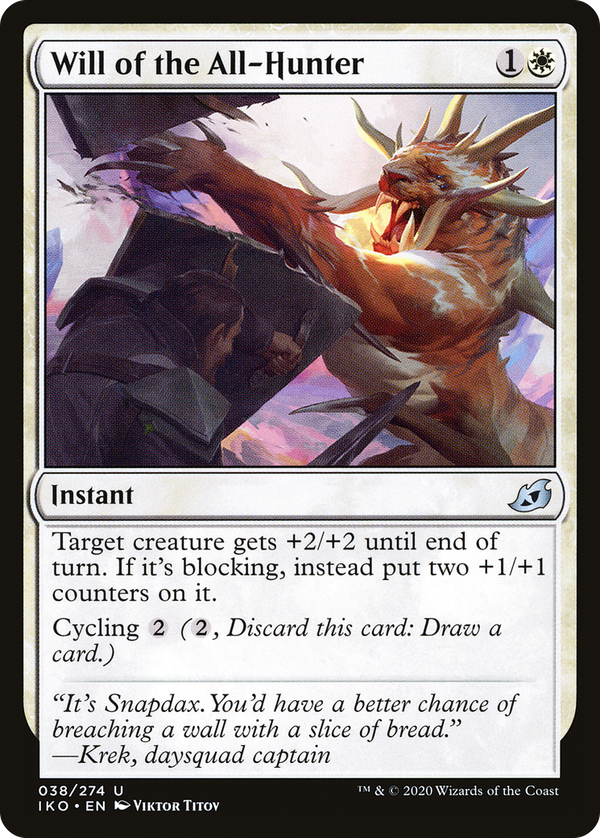
Rules text
 (, Discard this card: Draw a card.)