Wildfire Devils


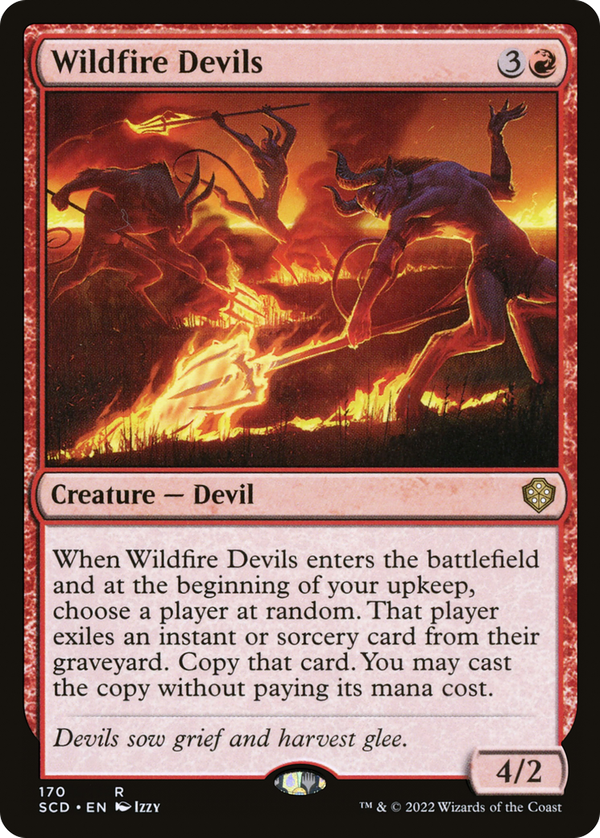
Recursion redesigned as a table-wide negotiation. The entry trigger fires once, and thereafter the ability comes back only on your own upkeep, so the engine is slower and rarer than it first reads. Each time it resolves, it names a player at random: that player can be you, an opponent, anyone at the table, and if they have no instant or sorcery in their graveyard, nothing happens at all. But the randomness stops there. Whoever gets chosen picks which card leaves their yard, so an opponent handed the choice will feed you the most inert spell they can find, a countered ritual or a spent cantrip, not the board wipe or the extra turn you were hoping for. That single wrinkle inverts the whole engine. You cannot count on lifting anything worthwhile from across the table, which pushes the card toward decks that stock their own graveyard with spells worth copying and accept that the die will sometimes land on someone else. The 4/2 body is the other constraint: fragile, an obvious target, and asked to survive from one of your upkeeps to the next, a window opponents have every reason to shorten. This is red's answer to graveyard recursion, chaotic and communal where blue and black hoard their spellbooks privately, and the design leans into the friction of shared choice rather than hiding it. The reward, when the Devils live and the roll goes your way, is a free copy on your turn; the cost is that the player choosing often has every incentive to hand you the least useful thing they own.