Wild Ox


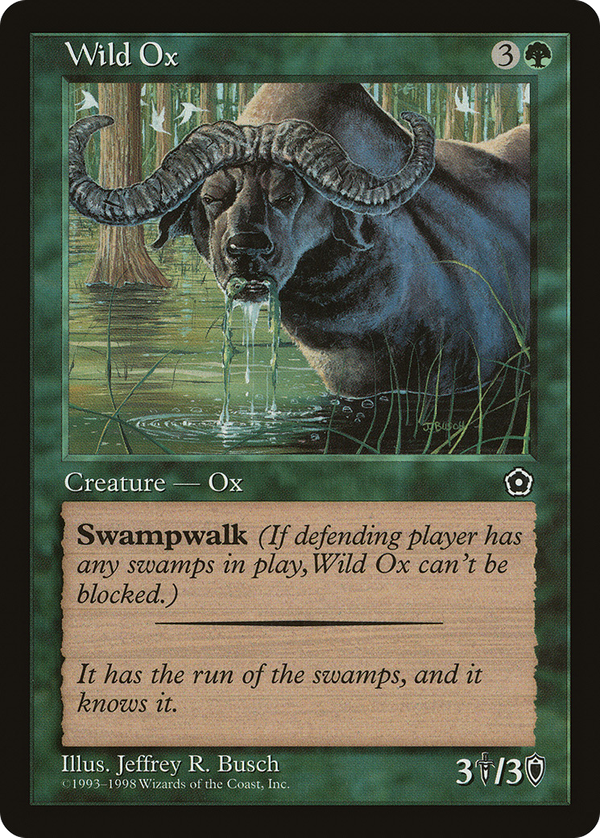
Landwalk was the era's answer to a problem that no longer reads as a problem: how do you give green a way to push through a stalled board without handing it evasion that works against everyone? The fix was conditional unblockability keyed to the opponent's land type, which made this 3/3 either a clean closer or a vanilla beater depending entirely on who sat across the table. Against a black deck it slips past any number of blockers; against anyone not on Swamps it is a fair-rate green creature and nothing more. That binary is the entire design. Magic's introductory products needed mechanics that were legible at a glance, and landwalk fit: read the defending player's lands and the answer is right there, teaching color identity through the manabase rather than through a keyword glossary. Swampwalk in particular leans on the flavor logic that an ox tramples through fen and marsh untroubled. The mechanic has since aged into near-total disuse, an artifact of when Wizards still believed punishing a specific color through your own creatures was a healthy lever. What remains is a tidy record of how early design tried to make evasion feel earned rather than granted: the ability does nothing on its own and everything against the right opponent, a rate the card never gets to choose.