Widespread Thieving


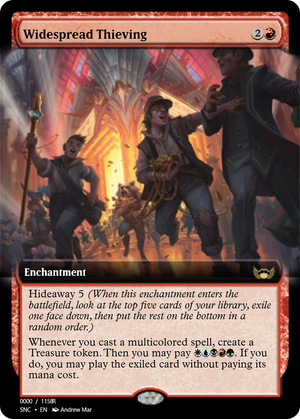
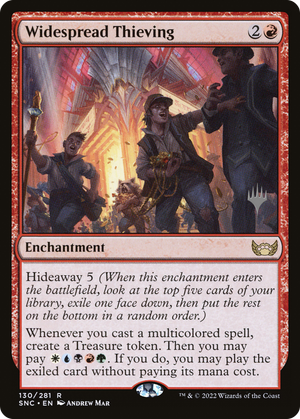
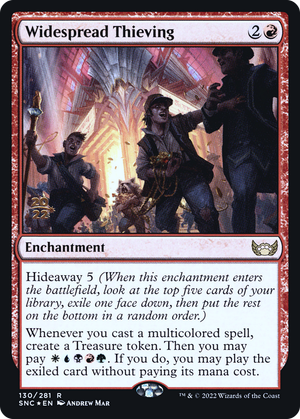
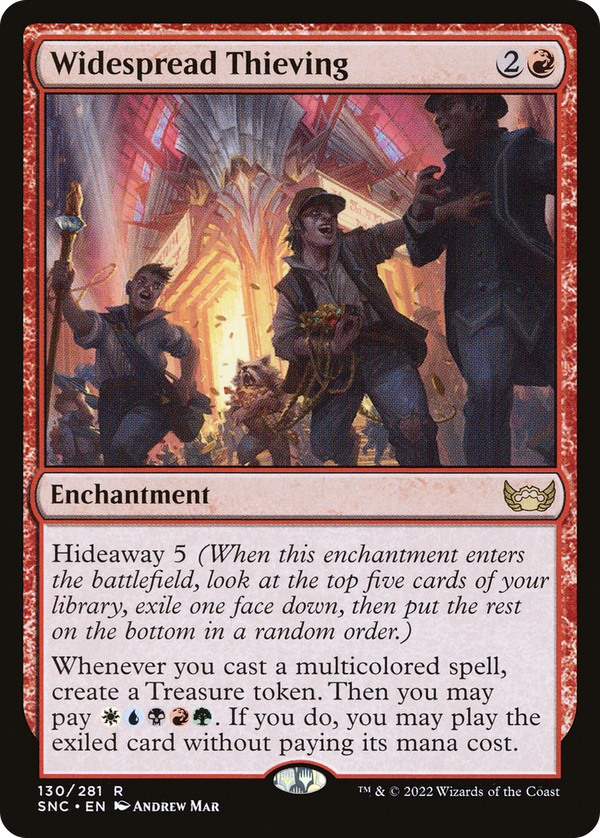
Hideaway usually lives on lands: a one-time setup that stashes a card and waits for some tidy condition to spring it free. Bolting it onto an enchantment that also builds Treasure changes what the payoff sequence looks like, because the two halves feed each other. Every multicolored spell you cast makes a Treasure, and that Treasure is precisely the kind of fixing that helps assemble the five-color payment the hideaway card demands. The design leans into a gold-heavy deck's natural sprawl: the more colors you're already casting, the more Treasures pile up, and the less the 


 tax stings by the time you want to cash in the buried card. It is a slow engine by construction, since nothing about it demands immediate value; the exiled card sits waiting while the Treasure count climbs. Notice how the marquee free-spell payoff asks for all five colors at once, an ask most decks meet only by spending the Treasures the enchantment itself produced. That self-referential loop is what defines the card: it is quietly self-funding rather than free, a rainbow payment paid in the currency it prints. What it rewards is committing hard to a multicolored gameplan and letting the Treasures accumulate until the five-color ask becomes trivial rather than aspirational.
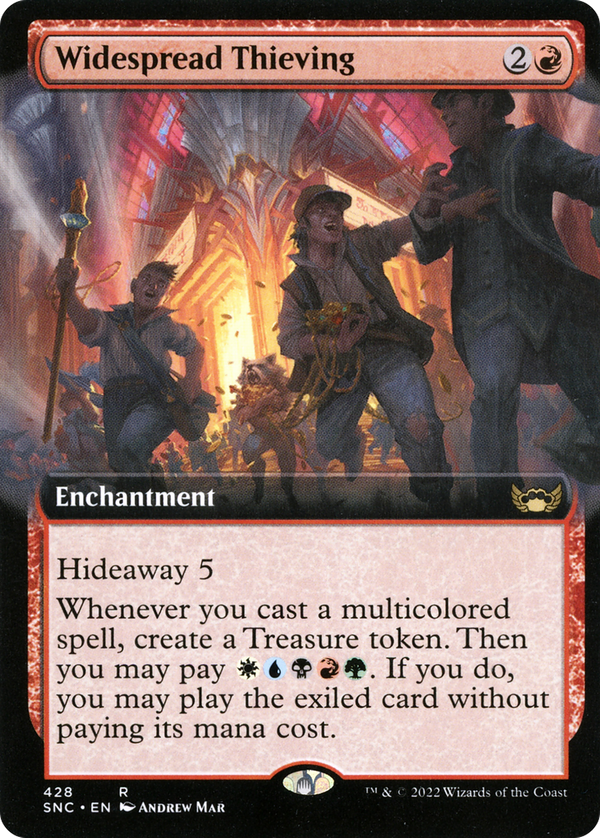
Rules text
. If you do, you may play the exiled card without paying its mana cost.