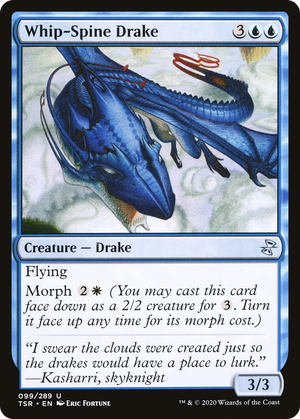
Whip-Spine Drake


The structural curiosity is the seam between the two faces: a blue flyer whose morph cost is paid in white. Most morph creatures flip into their own colors, so the face-down 2/2 is just a placeholder for whatever the controller is already representing. This one severs that link. Cast it the normal way and it is a straightforward blue flyer; cast it face down and the eventual flip taps white, a color the front face never advertises. The deception lives in the unmorph cost rather than the body. The catch the design walks into is that the white tax shows its hand: to flip the card you need white sources on the table, and an opponent watching you pay 
 into a face-down 2/2 has more information than a typical morph mind-game offers, not less. A creature like Willbender hides its reveal in colors you already have showing; this one demands a color split that telegraphs itself the moment you can afford the trick. As a body it is unremarkable, a 3/3 flyer for five mana whose face-up rate does not justify the slot, and the off-color morph asks for a splash that buys little. The proposition is the part worth keeping: whether morph's flip cost could carry a color identity the front face doesn't, letting one card sit in two color piles by how it's deployed. That experiment outlasts the rate. The card is a footnote; the question it tests is the reason to remember it.
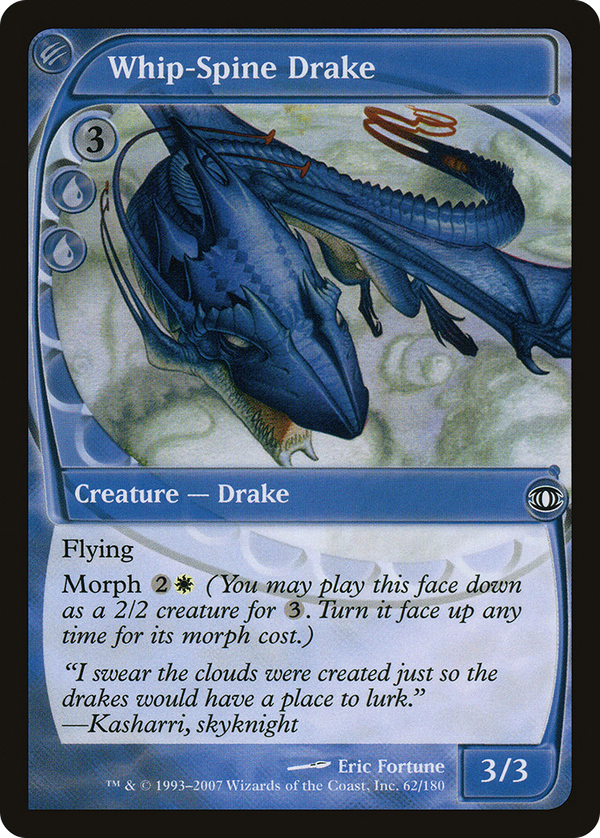
Rules text
(You may cast this card face down as a 2/2 creature for . Turn it face up any time for its morph cost.)