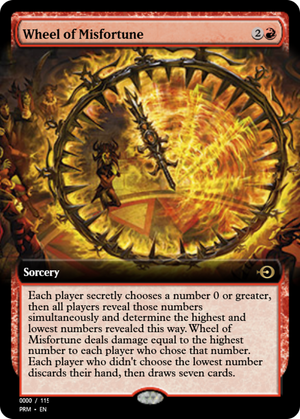
Wheel of Misfortune


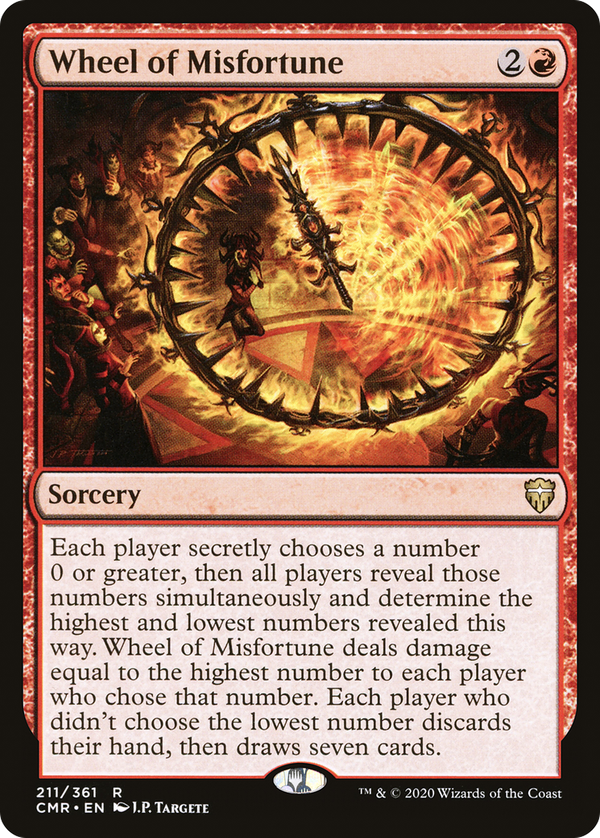
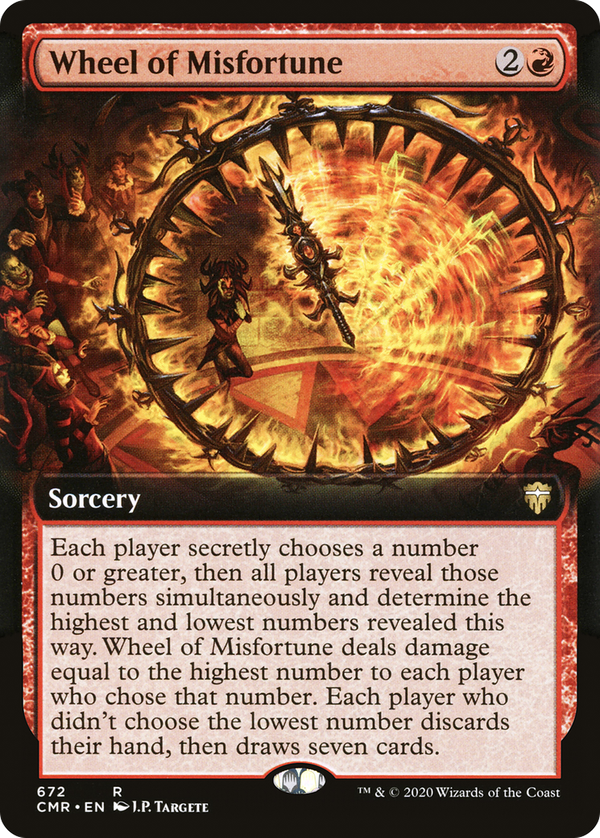
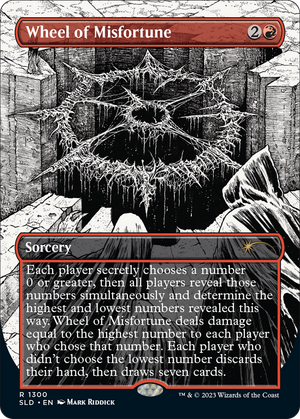
Wheel effects have always resolved in the open: everyone dumps their hand, refills to seven, and the table watches who benefits most from the reset. This one seals the trigger inside a hidden bid, then punishes the bid itself. Each player secretly picks a number, and that number carries three opposed pressures at once. Bid high and you want the fresh seven, but the highest number becomes damage to everyone who chose it (the full amount to each top-bidder who ties, not a divided share). Bid the lowest and you keep your hand while those who bid higher reload, which is often the last thing a red pilot wants at a table drawing new cards. Bid the lowest and you are skipped from the draw entirely. So the sealed number encodes a contradiction: I want cards, I do not want to die, I do not want to be the loser who misses the refill. The self-damage clause is what stops the spell from being a free reload; you cannot simply name a million to guarantee the draw, because the pain scales with your own greed. The seven cards are fixed. What varies is who pays for them and how much, and that outcome belongs to the table's nerve rather than the caster's, closer to a sealed-bid auction than anything in the game's usual combat-and-mana vocabulary.