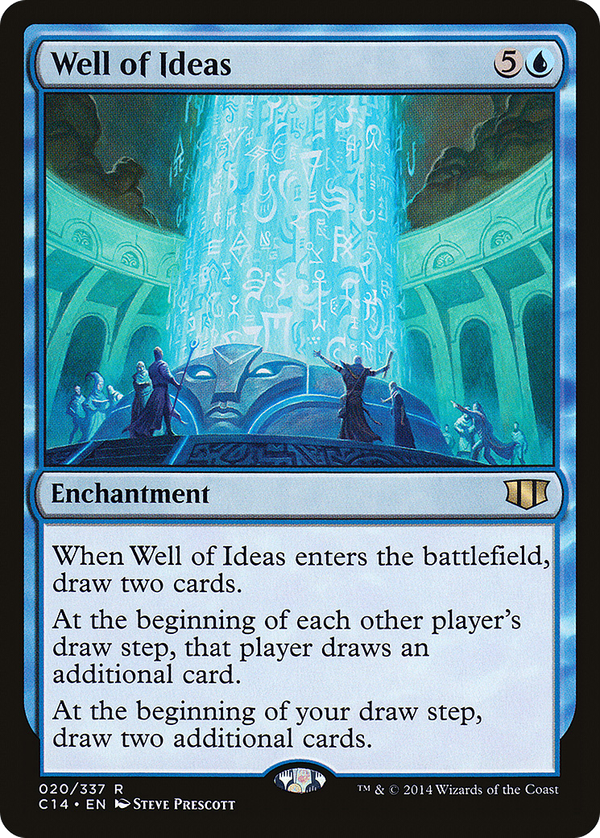
Well of Ideas


The wager is stacked in your favor only barely, and the card is honest about it: you draw two extra each of your draw steps against every opponent's single extra, plus the two-card jolt when it lands. Do the accounting across a full table, though, and the ledger flips: three opponents each drawing an additional card every turn collectively out-dig your private surplus by a wide margin. This is not a solitaire engine, and treating it like one leaks value fast. It belongs to the school of multiplayer design that fuels the whole table on purpose and then asks who converts the surplus first: a wheel-and-storm payoff that wants raw card count, a punisher that taxes every draw and turns the opponents' bonus into damage, a combo shell that does not care who else is filling their hand. In those shells the lopsided extra on your own draw step stops being the plan and becomes the tiebreaker: everyone is drawing, but you drew more and you built to weaponize it. Dropped into a deck with no way to abuse a table awash in cards, it is a gift to your opponents with a small kickback attached. The design lives or dies on whether the shell around it can spend the flood faster than the people you just handed it to.