Waterveil Cavern
The bargain here is a turn of tempo: the colorless tap is always free, but the moment you reach for blue or black, this land sits out your next untap step. That self-imposed penalty is the cost of fixing two colors on a single untapped surface, and it puts the burden on the moment you actually need the color rather than the moment the land enters. This is the deferral school of dual-land design: instead of entering tapped or draining life, it mortgages its own future availability, so you pay later and only when you ask for color. The trade rewards manabases that don't need the same source two turns running, and it punishes the greedy double-spell turn that taps it for color and then needs it again right away. Sitting between the all-upside duals of the earliest sets and the tapland-and-painland compromises that came after, it stakes out a deliberate middle ground: cheap on entry, awkward on repeat use, and most comfortable as a flex source rather than the spine of the mana. The skip-step penalty also rewards reading the turn ahead: tap it colorless when you can plan two turns of color around it, and the drawback never lands.
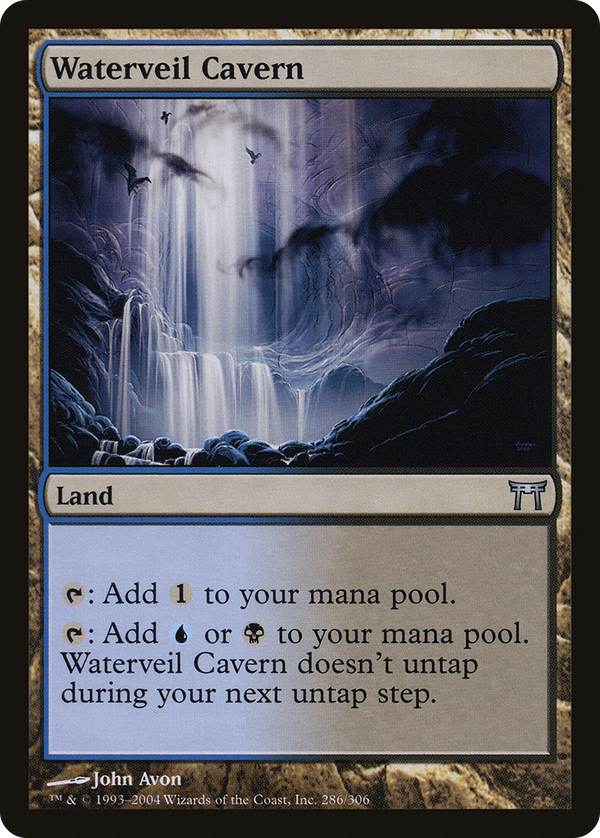
Rules text
 : Add
: Add  .
: Add
.
: Add  or
or  . This land doesn't untap during your next untap step.