Waterbending Lesson


Draw three, then discard one unless you pay a little extra: that is the familiar shape of card advantage at this cost, and the waterbend clause is the release valve on the discard. The tax to keep all three is a flat  , payable however you like. Two open mana settles it clean. What the mechanic adds is a second currency, the convoke-style option to tap creatures and artifacts for
  each, so the choice lives on resolution rather than on the cast. Leave mana up and the board untouched, or tap idle permanents to shore up the cost when you have already spent your turn elsewhere. That flexibility matters most at the margins, when you cast this tapped out with mana committed but bodies standing around doing nothing, and they cover the tax for free. The structural wrinkle is pointing a tap-to-pay cost at maintenance rather than casting: convoke and its kin discount the spell going onto the stack, while here the help lands after the draw, subsidizing whether you keep the third card. The result is a refuel whose real price is optional and negotiable. Pay it in mana, pay it in tapped permanents, or decline it entirely and take the net two. Decks that end turns with untapped creatures and no better use for them get the cleanest deal: three cards for four mana with a tax they never actually feel.
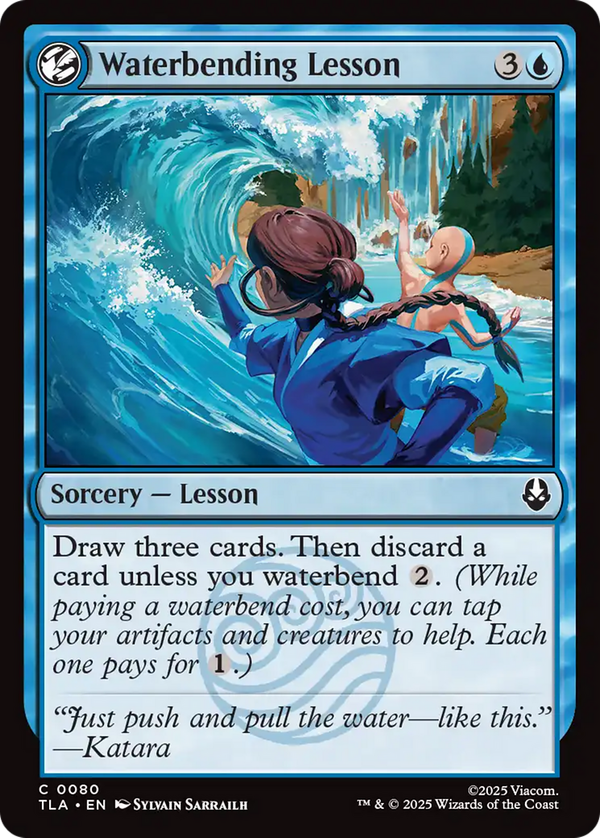
Rules text
. (While paying a waterbend cost, you can tap your artifacts and creatures to help. Each one pays for .)