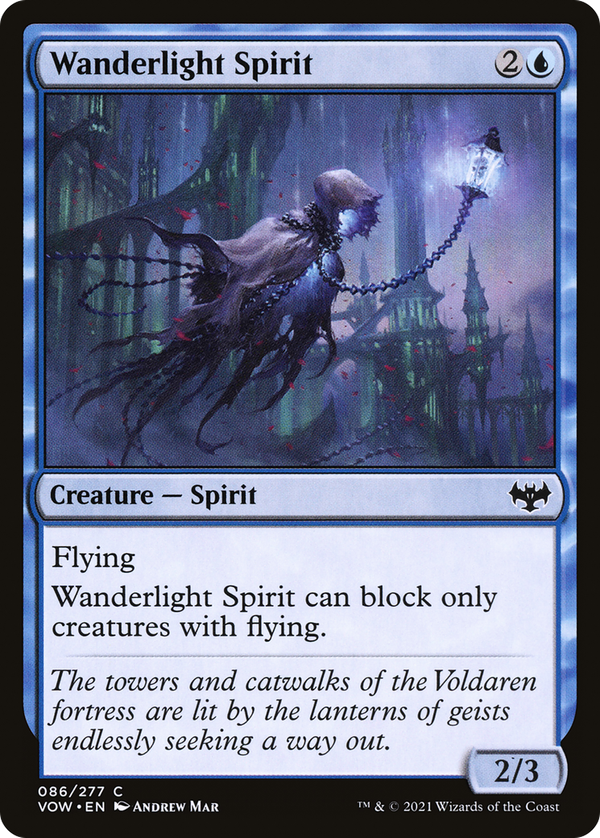
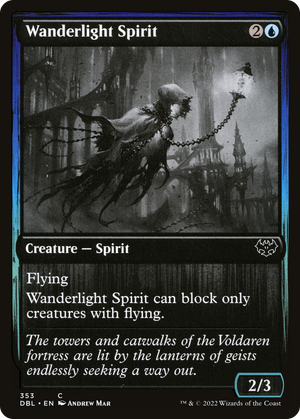
Wanderlight Spirit


A 2/3 flier for three mana reads like clean filler until the second line reshapes what the body is worth: it cannot block anything on the ground. Evasive creatures normally pull double duty, holding back the opposing skies while a stalling deck buys time below. Strip that out and you are left with a body built purely to attack and to trade with other airborne threats, never to plug the hole a creature-light board leaves open. This is the kind of downside designers reach for when a stat line runs a hair too generous: a 2/3 flier at this cost would be a quietly premium blocker, so the restriction pays down the toughness advantage by making that toughness useless against exactly the creatures a slow deck most wants to survive. The card ends up stronger on offense than its numbers suggest and weaker on defense than its numbers suggest, the whole design living in that asymmetry. In the air it still blocks and trades freely, so a board full of flying threats quietly erodes the drawback to nothing; against a ground swarm it is a permanent attacker forced to race rather than stall. The blocking clause does not just soften the rate, it points the card in a single direction and refuses to let it wander back.