Wall of Vipers


A blocker priced as a threat, not a body: the  mutual-destruction ability is what gives this 2/4 its teeth. Most defensive creatures of its era held the ground by simply being hard to kill in combat; this one holds it by promising a guaranteed one-for-one swap to anything that tests it. The clause letting either side fire the ability is the genuinely strange part. In practice the attacker almost never pulls the trigger, because feeding a better-statted creature into a forced trade rarely improves his position, so the Wall functions as a deterrent that wins by being left alone. When the ability does resolve, it is usually the Wall's own controller dragging down whatever it is already chump-blocking, converting a wasted block into a real removal spell. The cost matters: three generic on top of a body already committed to combat is steep, and being tapped out elsewhere often settles whether the trade happens at all. The symmetry reads as flavor more than function, a coiled snake that strikes at whoever comes too close. Later design handed this exact job (a blocker that punishes attackers with a clean trade) to deathtouch and edict effects, which do the same work without asking the table to read who gets to press the button. This is a snapshot of an earlier vocabulary, before defensive removal settled into cleaner templates.
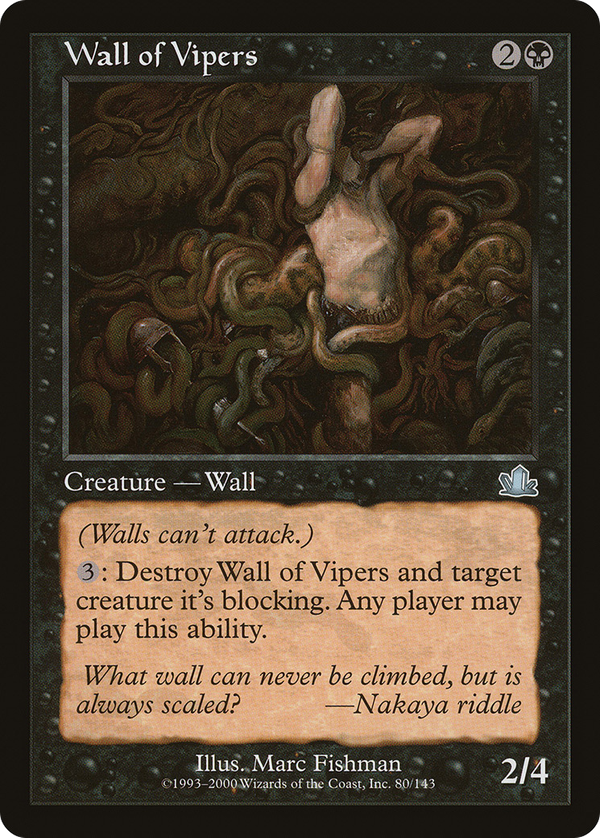
Rules text
: Destroy this creature and target creature it's blocking. Any player may activate this ability.