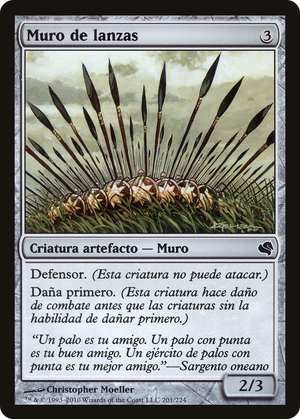
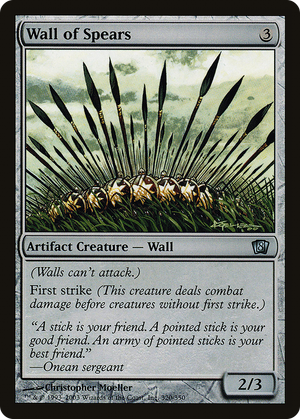
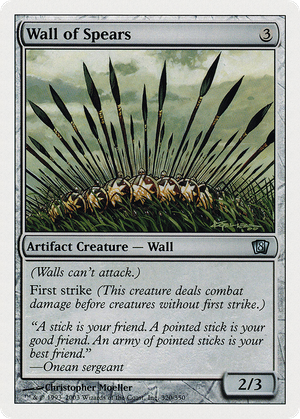
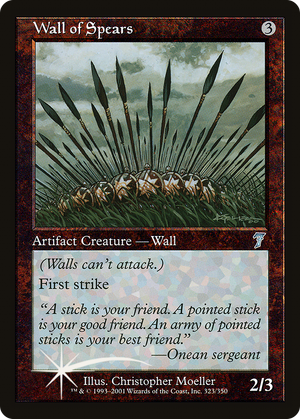
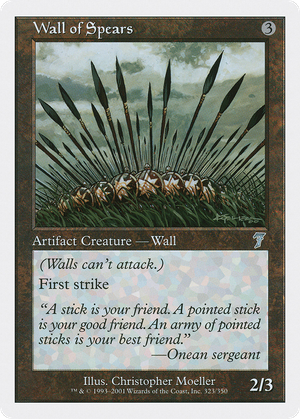
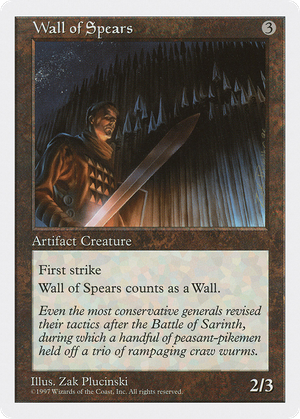
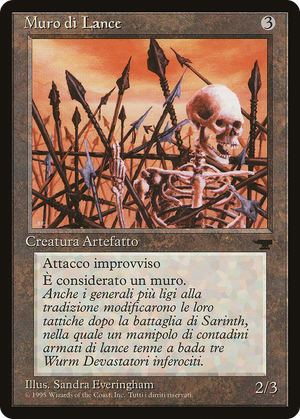
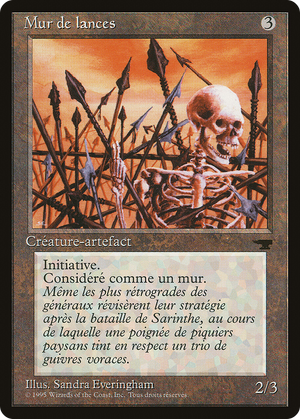
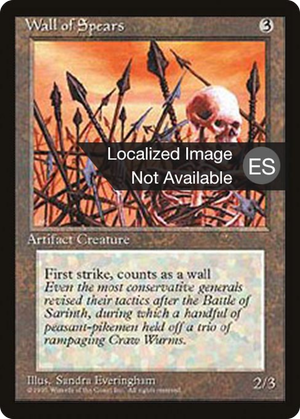
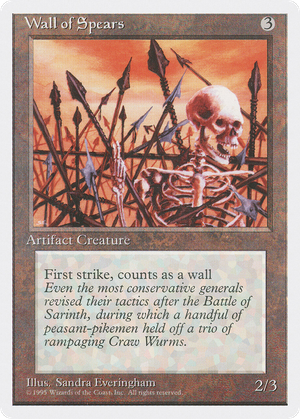
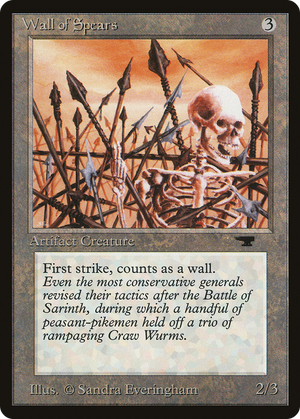
Wall of Spears

Walls in early Magic were a design experiment in giving defense a body and a cost, and this one is the clearest expression of the formula: pay extra to fold an aggressive keyword onto a blocker. The math is deliberate. A 2/3 first striker eats most of the era's commons in combat without trading, which is why you pay three colorless rather than one or two for a vanilla defensive body. The artifact type was the second half of the bargain: any deck could run it, and in a period when removal for artifacts was narrow and removal for creatures was largely red, a colorless first-striking blocker was meaningfully harder to dislodge than its green or white counterparts. The lineage runs from here through every "Wall with a keyword" Wizards has printed since: Wall of Reverence, Wall of Omens, Wall of Blossoms. Those later walls justified the rate with card advantage rather than combat math, which is the design lesson the early ones taught. A blocker that only blocks is priced at one or two mana; a blocker that does anything else has to earn the upcharge. First strike, before the value-blocker template existed, was considered enough.
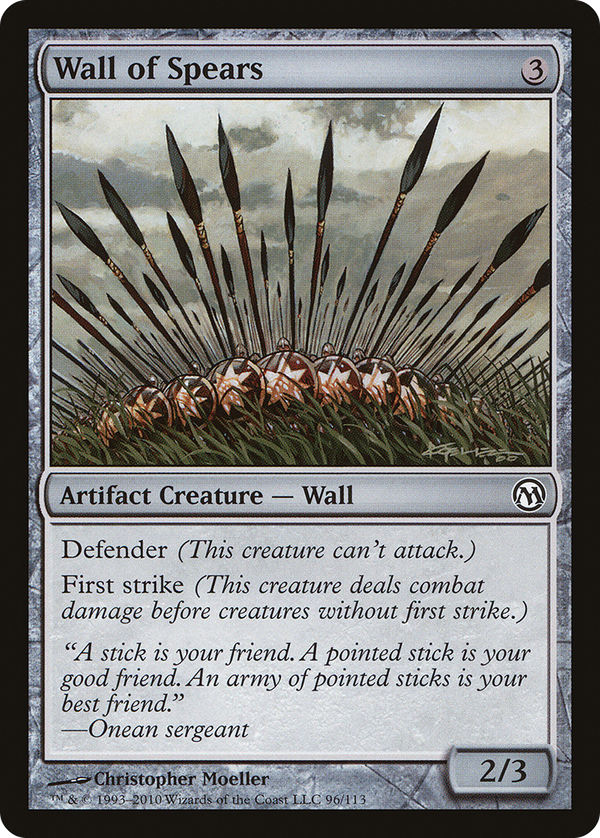
Rules text
Format Status
More formatsFewer formats
Other printings
- Salvat 2011#201
- Eighth Edition#320★
- Eighth Edition#320
- Seventh Edition#323★
- Seventh Edition#323
- Fifth Edition#407
- Rinascimento#148
- Renaissance#166