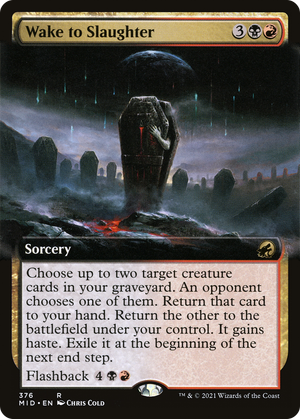
Wake to Slaughter



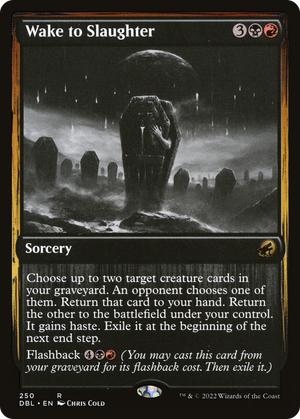
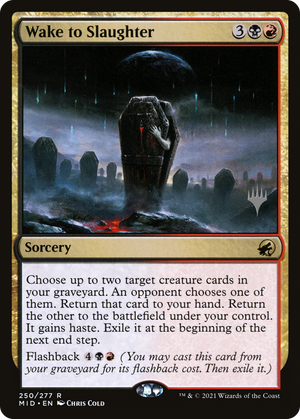
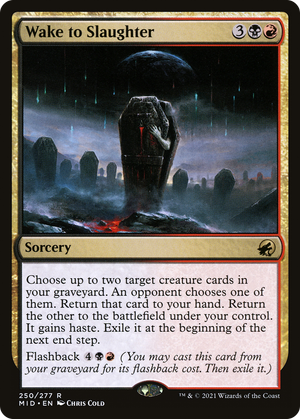
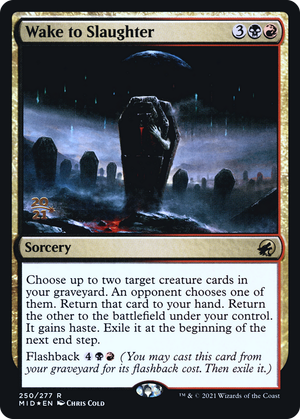
The trick to the design is that you never get the card you'd choose. Reanimation spells that let the caster pick which creature returns have to be priced against the ceiling of your graveyard; this one hands the selection to an opponent, so the reward is capped at the worse of two targets you offer. That inversion sets the rate: you pitch your best two dead creatures, and the opponent decides which one comes back to the battlefield and which merely returns to your hand. Both cards leave the graveyard, but only one hits play, and it's a haste-fueled one-turn rental (exiled at the next end step) rather than a permanent gain. The negotiation is one the caster rarely wins outright: name two comparable threats and the choice barely matters, name one bomb and one dud and you'll get the dud swinging while the bomb sits in your hand awaiting a hard cast. Where it earns its keep is with creatures whose enters-the-battlefield or attack triggers do their damage regardless of how long they stick around, since a one-turn haste swing from something with a payload on arrival collects value the opponent can't deny by picking the "safe" return. Flashback doubles the reach, letting the same spell fire twice across a game and drain a graveyard of its two best pairings. It's reanimation reframed as a bargaining problem, and ceding the choice is the friction that lets it cost what it does.
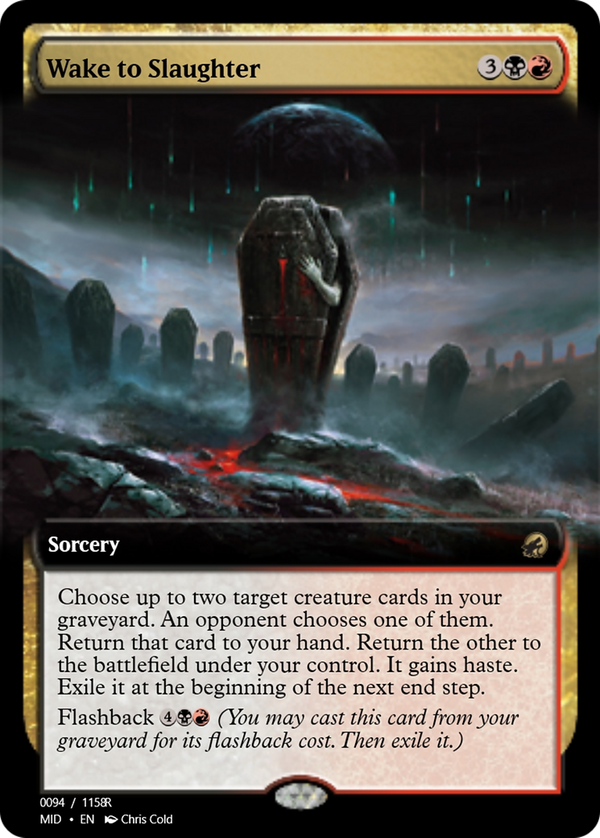
Rules text
 (You may cast this card from your graveyard for its flashback cost. Then exile it.)