Wake the Dragon



Six mana for a token-generator is a steep ask, and the design pays for it by building a threat that does more than swing: the Dragon it makes carries a combat-damage trigger that peels an artifact off whichever player it connects with. The theft rides on combat rather than the cast, which is the whole calculus. The token has to survive a turn and land a hit before it repays you, so the 6/6 is doing double duty as both the payoff and the removal magnet inviting the answer. Flying is what makes the trigger reliable, letting the Dragon sidestep the ground blockers that would otherwise stonewall it; menace covers the air just as well, since a would-be blocker cannot go one-for-one to eat the trigger. The flashback clause reframes the whole card as a two-shot investment rather than a single spell: the first cast is often the expensive throwaway that draws out an answer, and the second, cast straight from the graveyard before the spell exiles itself, is the one that actually resolves the theft, giving two independent windows to steal two different artifacts across a game. That structure rewards patience over tempo, an unusual posture for a red-black haymaker at this cost. Most spells this expensive want to close the game; this one wants to grind an artifact-reliant opponent out of its best pieces one connection at a time.
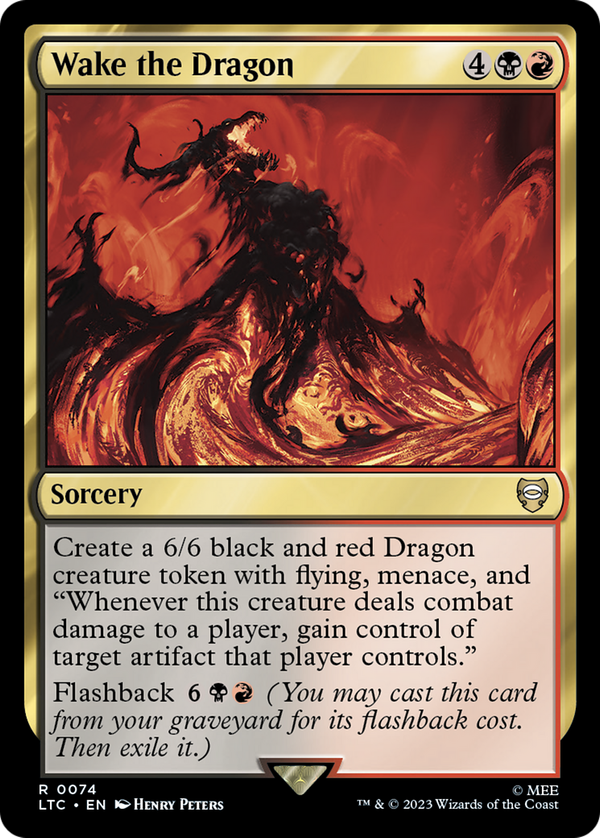
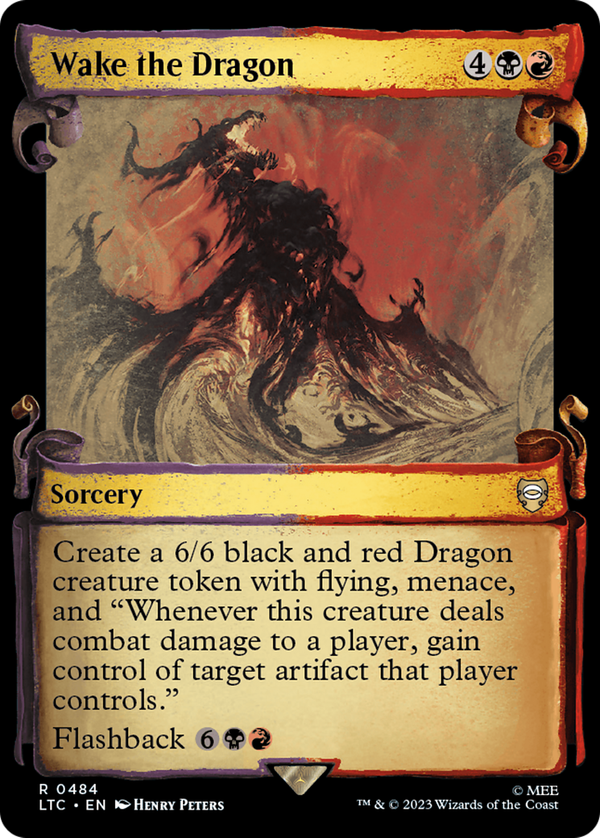
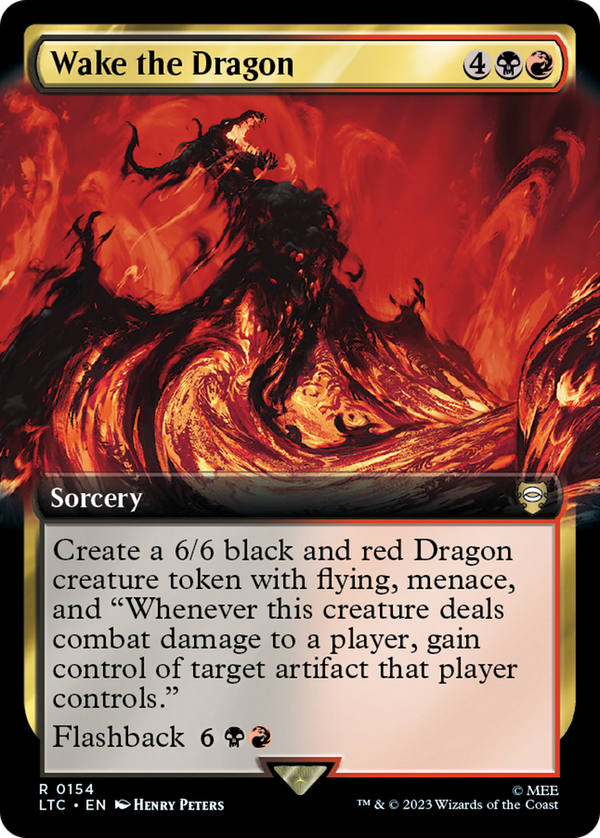
Rules text
 (You may cast this card from your graveyard for its flashback cost. Then exile it.)