Visions of Ruin


Multiplayer artifact hate has always faced the same math problem: symmetrical destruction spreads its cost across every opponent but pays the caster once, so a Vandalblast or Shatterstorm clears the board and leaves you no further ahead than the neighbor who did nothing. This flips that ledger. Every artifact your opponents sacrifice hands you a Treasure, converting their removed permanents directly into your ramp. In a four-player game where three opponents each lose an artifact, you clear three problem permanents and bank three Treasures for the turn's next play, turning a tax into an engine. The flashback clause is where the design reveals what it is built for: an  recast reduced by the mana value of your commander, a cost structure that only exists in a format with a command zone. Cast a sufficiently expensive commander and the graveyard recast becomes trivially cheap, letting the same sorcery come back for a second wave of forced sacrifices and a second round of Treasure. The scaling is deliberately keyed to commander size, so the more top-heavy your general, the more the back half of the card gives you: a piece of removal that grows more repeatable in exactly the decks least likely to be short on artifacts to punish.
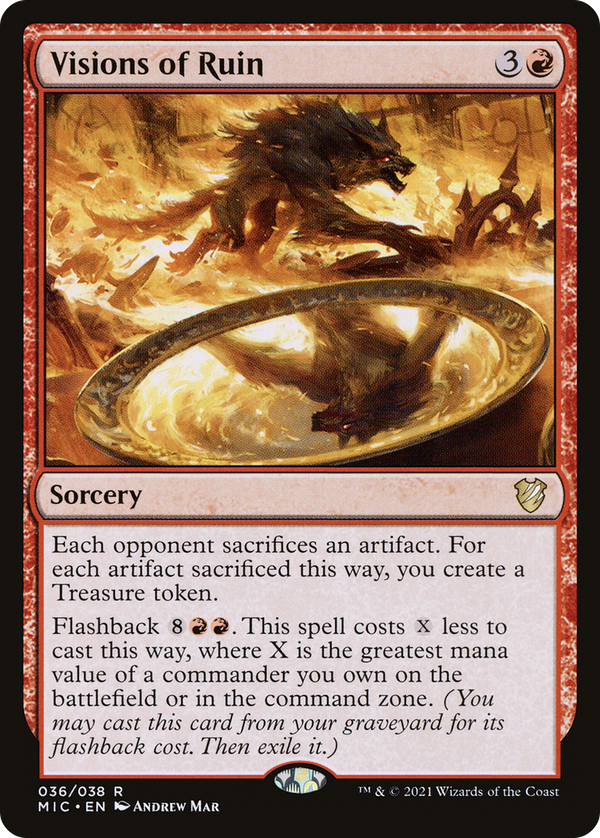
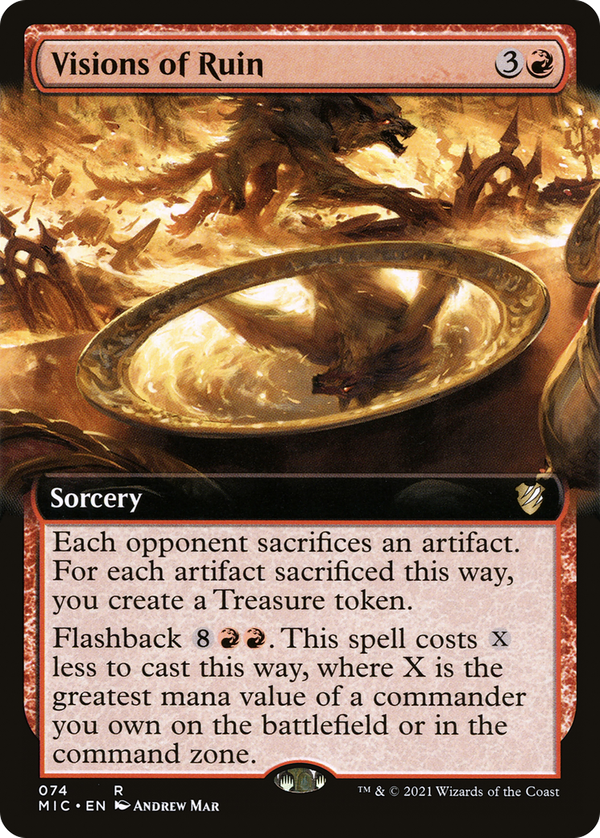
Rules text
. This spell costs  less to cast this way, where X is the greatest mana value of a commander you own on the battlefield or in the command zone. (You may cast this card from your graveyard for its flashback cost. Then exile it.)