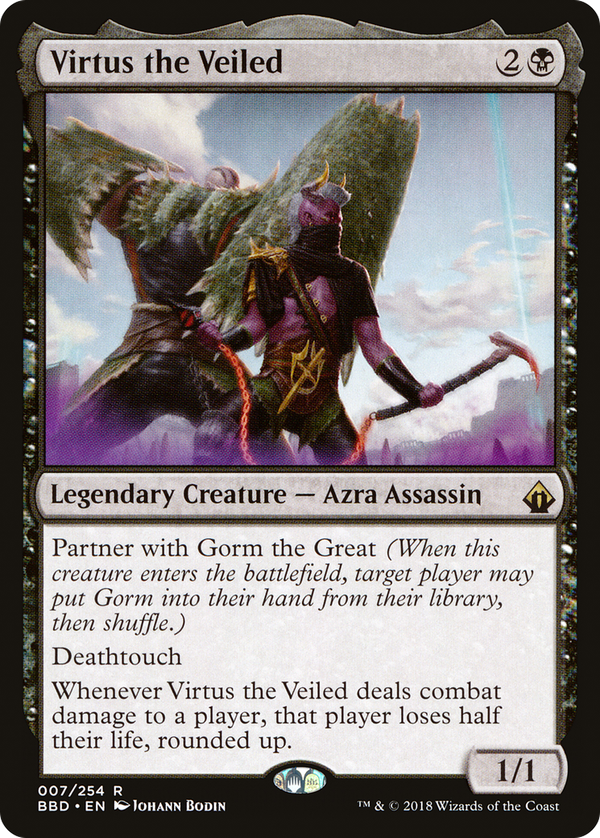
Virtus the Veiled


The damage trigger reads current life, not power, so a 1/1 body subtracts exactly as much as any hulking threat would: the size of the attacker is irrelevant to what the connection does. That inversion is the whole design. Where most evasion payoffs scale with the attacker, this one scales with the defender's remaining total, which means the first hit is always the biggest and every subsequent hit does less. Halving is a decelerating clock: it takes a chunk out of a full life total but returns diminishing amounts as that total shrinks, so it wants a partner or an outside push to finish the job it started. Deathtouch is the defensive tax. Blocking a 1/1 with deathtouch trades a genuine creature for a body worth almost nothing on offense, a swap the attacker happily accepts, so most opponents choose to take the hit rather than lose a blocker, and taking the hit is precisely what feeds the trigger. The Partner with clause names the intended running mate: Gorm the Great redirects combat damage to itself, reshaping the blocking math on the board while the assassin slips through for the connection that matters. The two are built as a unit, one absorbing attention while the other lands the halving. Alone, this is a single-purpose engine asking for one thing, unblocked combat damage once a turn, offering a slow squeeze rather than a clean kill.