Vintara Elephant


Trample sits on a 4/3 body here, but it comes with a release valve handed to the wrong side of the table: for three generic mana, anyone may strip the trample until end of turn, and the obvious anyone is whoever is blocking. The evasion you paid for stays on only as long as the defending player lacks three mana or a reason to spend it. That inverts how evasion is usually balanced. Most keyword evasion is priced into the body's static rate; this puts the off-switch in the hands of the person it punishes, and the negotiation replays every combat step. A chump blocker normally soaks one creature and lets the rest through; against this, the defender can pay to make a single blocker eat the entire body, turning the keyword's whole purpose against the attacker mid-combat. The result is a creature whose most consequential line of text belongs to your opponent: the body attacks, but whether it tramples is a decision someone else gets to make for the cost of three mana. It comes from an early-era run of reversed-incentive experiments, abilities deliberately priced for the player they hurt rather than the one who controls the permanent, and this is the combat-math entry in that catalog: not a drawback baked into the rate, but an option the table owns.
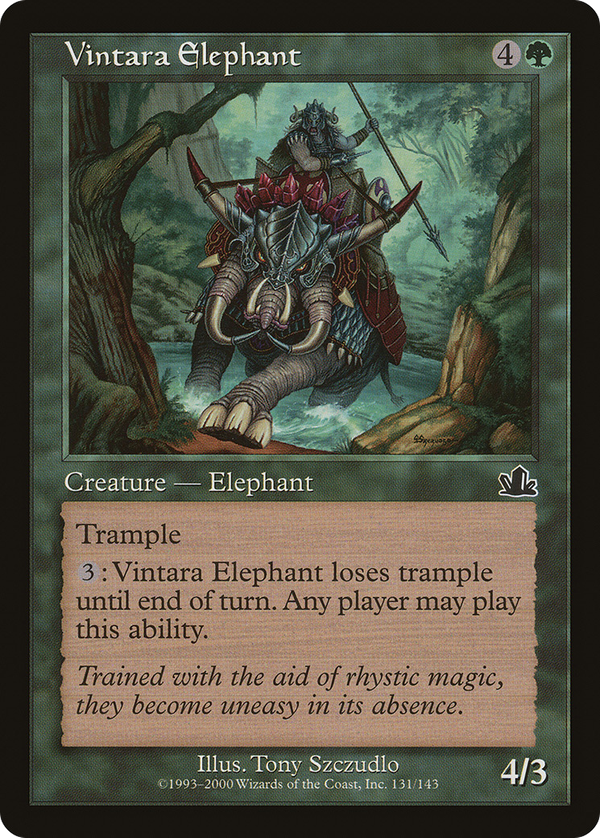
Rules text
 : This creature loses trample until end of turn. Any player may activate this ability.