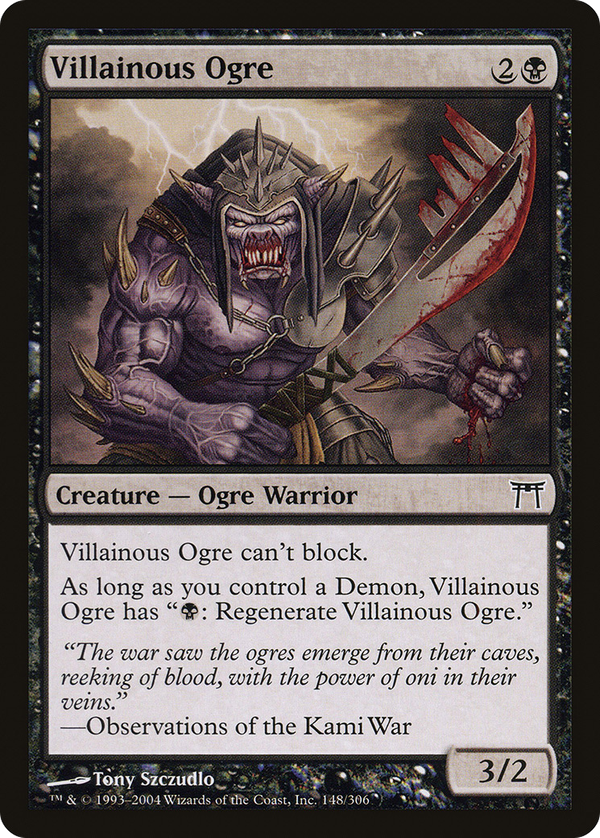
Villainous Ogre


A 3/2 for three is baseline rate, a clean 1:1 of power to mana, so the can't-block clause is not paying for an undercosted body: it is the price extracted for a clean-rate one. The logic is positional. A creature meant to come down and attack does not need permission to defend, so the design trades away the block to keep the statline honest, leaving a pure aggressor that surrenders the back rank entirely. The regeneration rider then changes what that aggressor is worth, but only on a condition: control a Demon and the ogre stops trading down to removal or in combat, hardening from a fragile two-toughness body into a recurring threat that still can't sit back. That conditional is the tell that this was tribal scaffolding, a common-rarity reward built to make assembling a Demon board feel like it unlocked something rather than just adding bigger creatures. The dependency is also why the card never traveled past the archetype it served: with no Demon in play, the regeneration line is dead text, and the ogre reverts to a fragile attacker that gave up the block for nothing. It is a design where the same restriction reads two ways depending on the board around it, drawback in isolation and ante for a payoff once the tribe assembles.
Rules text
: Regenerate this creature."