Vessel of Paramnesia


Mill three and draw a card is a function blue has worn in plenty of guises, but the design move here is putting that function on an enchantment that has to sit on the battlefield before it pays out. The split-cost structure is the whole logic: you commit one and a blue mana to deploy the shell, then later spend a second blue mana to crack it. That delay buys two things at once. The card sits on the board as a piece of an enchantment count or sacrifice fodder until you need it, and the activated sacrifice lets you choose the moment, holding the mill until an opponent's graveyard matters or a self-mill payoff is online. Targeting any player rather than only an opponent is the tell that this was built to feed graveyard strategies as much as to attack them: aim it at yourself when the cards in the bin are worth more than the cards in the library, aim it across the table when they are not. The cantrip is what keeps the whole thing from being card disadvantage, replacing the enchantment in hand the moment you spend it. It is a small, modular piece of design, the kind that asks to be one cog among several rather than the engine itself, and the deferred, instant-speed activation is what makes it flexible enough to bother running.
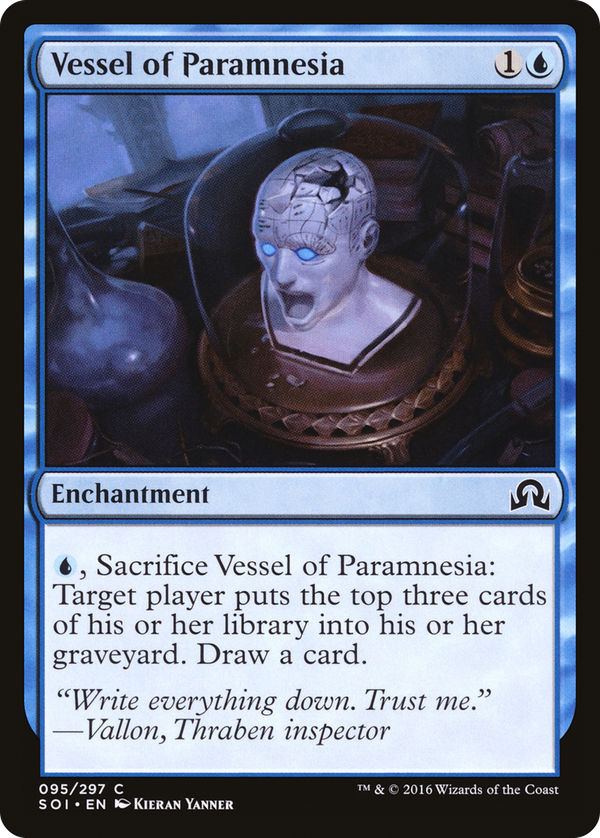
Rules text
, Sacrifice this enchantment: Target player mills three cards. Draw a card.