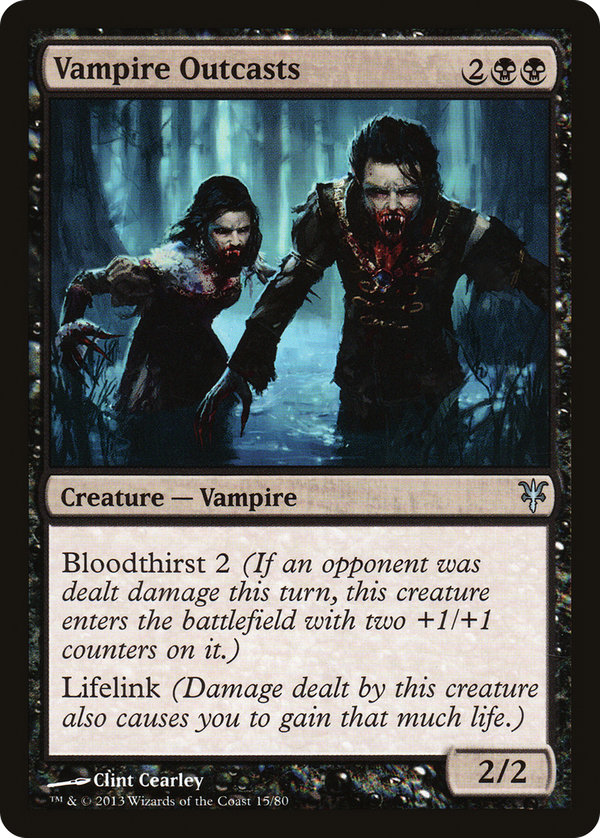
Vampire Outcasts


Bloodthirst always asked you to read the board before you committed, and the timing is stricter than it looks: damage has to land first, so any source of damage this turn can enable it, whether from combat or a burn spell before your attackers (or any other source) have already drawn blood. Connect first and this arrives as a 4/4; cast it into a stalled or empty board and it sits as a 2/2 for four. That swing is the whole design tension, and lifelink is the concession that keeps the small end from feeling like a dead draw. A 4/4 lifelink attacker in aggressive black gains four a turn and presses races hard; a 2/2 lifelink body at least stabilizes a point or two while you find footing. The mechanic rewards being the aggressor twice over: the deck that gets there first fields a bigger creature, and the bigger creature gains more life when it swings, compounding the tempo lead. It is a clean example of a keyword that scales with initiative rather than with mana spent, which is why bloodthirst lived almost entirely in proactive decks that could reliably push a point of damage through before turn four. The lifelink rider is the wrinkle that lets a whiff still earn its slot: even when no damage came first, the floor is a body that buys life rather than a vanilla 2/2 doing nothing.