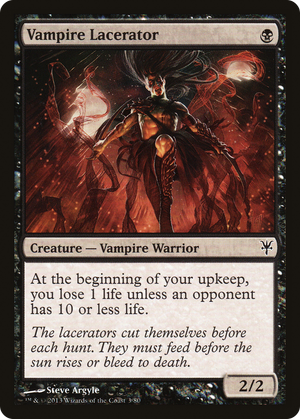
Vampire Lacerator

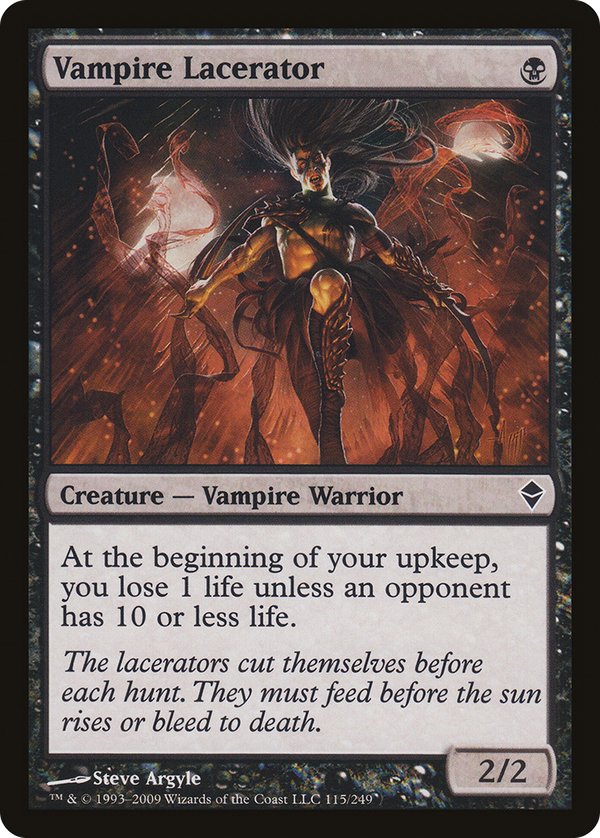
The deal here is brutally simple: a 2/2 for a single black mana, in exchange for a clock that ticks against its own controller. The upkeep life loss is the cost, and it is structured to invert as the game develops. Early, when the beatdown is going well, you bleed; once an opponent drops to ten or below, the drawback evaporates and the card becomes a clean one-drop. That conditional shutoff is the clever part of the design: the very damage the creature is meant to enable is what eventually silences its downside, so the penalty is steepest exactly when the deck is least sure of closing. It rewards a deck that can finish before the math turns against it and punishes the durdling that leaves you draining yourself for nothing. The lineage is older than this particular phrasing: black has always sold above-rate aggression at the price of life, from the painlands to the bargain-rate one-drops that bled their controllers in exchange for raw power. What distinguishes this one is that the tax is self-resolving rather than fixed, a small piece of tension that makes the card live or die on tempo. Build a board that races and the life loss is a rounding error; stumble and the same upkeep trigger quietly helps your opponent finish you.