Vampire Charmseeker



Eight mana for a 3/4 flyer that buys back a spell is a rate no duel-format deck would entertain, and that disconnect is the whole point: this was designed for a shared table, not a single opponent. The Assist mechanic rewrites the arithmetic, letting a teammate cover up to of the cost while the controller pays as little as . The recursion clause it funds is deliberately open, retrieving a partner's removal, a key creature, or a bomb sorcery as readily as your own, so the ability becomes a negotiation between two seats rather than a solitary investment. That partnership framing distinguishes it from the many expensive blue-black value flyers it otherwise resembles; the body and the graveyard-return trigger are unremarkable on their own, but the cost structure presumes another player sitting on your side of the table. Strip the multiplayer context away and there is nothing to discuss: a sluggish Wizard with a stapled regrowth effect. Keep it, and the card turns into an exercise in cooperative pricing, asking how much value two players will jointly commit to recur a single card. It is one of the clearer demonstrations of how Assist prices an effect for a pair rather than an individual, sizing the payoff to a cost that only makes sense when it is split.
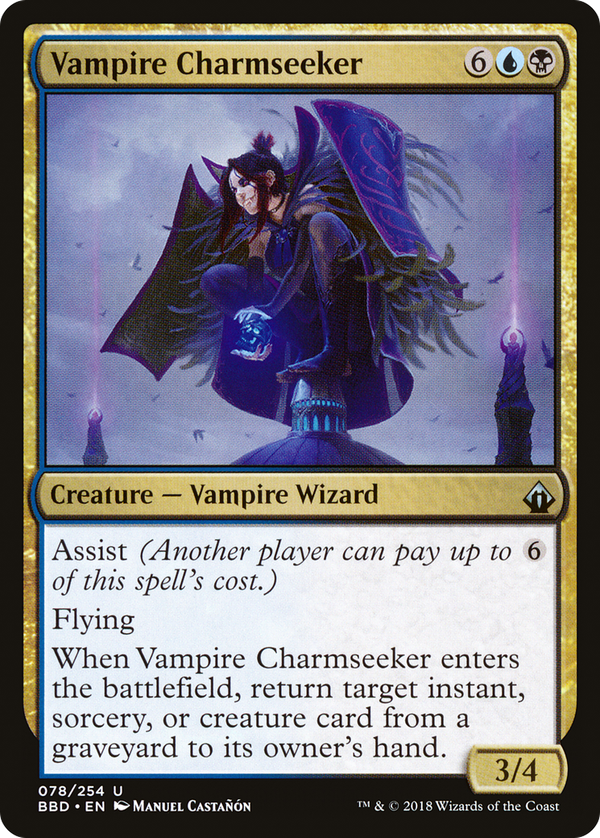
Rules text
of this spell's cost.)
Flying
When this creature enters, return target instant, sorcery, or creature card from a graveyard to its owner's hand.