Uro, Titan of Nature's Wrath



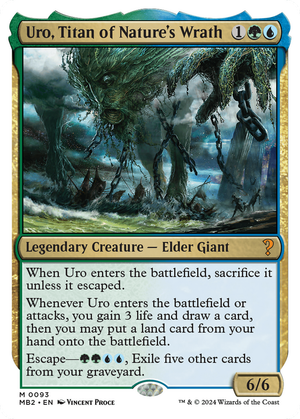
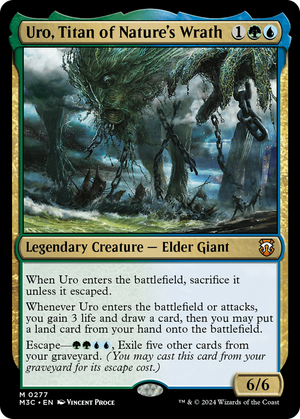
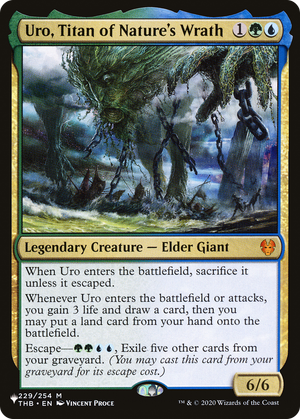
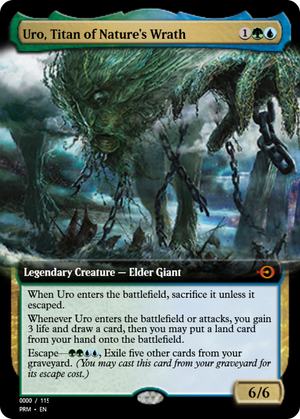
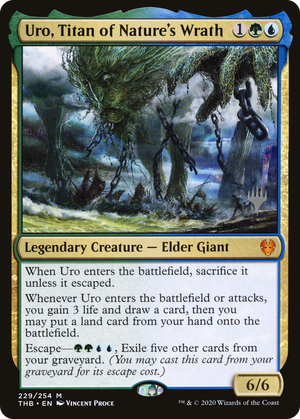
Cast from hand, this leaves nothing behind: gain three life, draw, drop a land, then the self-sacrifice trigger sends it to the yard before the 6/6 ever matters. That first cast is deliberately transactional, a Growth Spiral bolted to a life buffer, priced so the body never touches the battlefield for longer than a trigger. Escape is where the design pivots. Exiling five other cards from the graveyard asks you to have played a real game first, and paying that cost flips off the sacrifice condition so the giant stays. Every subsequent attack repeats the enter-trigger's engine, so a resolved Uro is a recurring source of life, cards, and lands attached to a body large enough to end games on its own. The reason it drew bans across multiple formats is that both halves are individually fair and jointly oppressive: the front half smooths early turns and gains enough life to outlast aggression, and the back half converts a full graveyard into an inevitable, self-refueling threat that opposing answers cannot cleanly two-for-one. Escape usually reads as a graveyard toolbox printed for flavor value; here it does structural work, gating the payoff behind a graveyard deep enough to feed it. This is escape repurposed not for recursion but as a delayed win condition, the front half quietly buying time until the back half can spend the fuel.
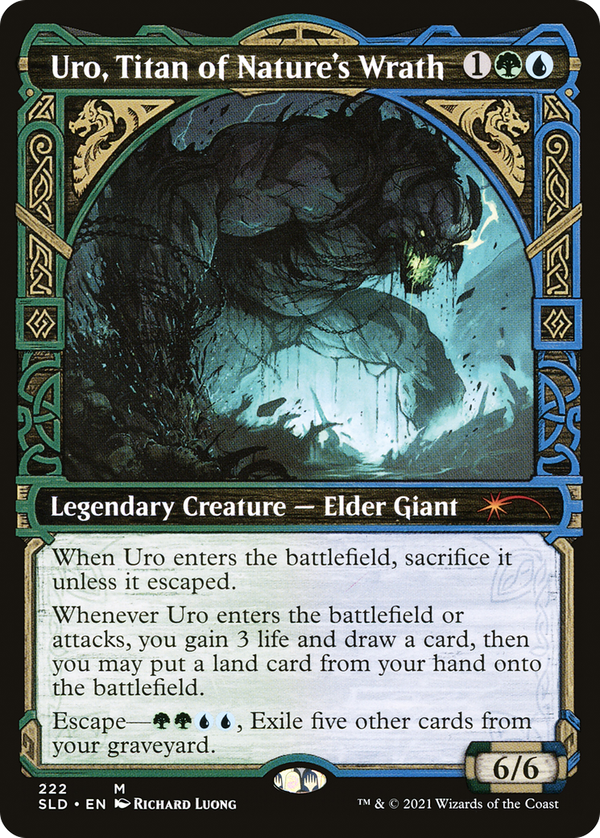
Rules text
, Exile five other cards from your graveyard. (You may cast this card from your graveyard for its escape cost.)