Ureni's Rebuff


Bounce a creature for two mana and the transaction usually closes there: the tempo swing lands, the card goes to the yard, and that is the whole exchange. Harmonize reopens the back half by letting the same spell come back from the graveyard for a much steeper price, castable a second time when the board has developed. The clever part of that steep price is the power-reduction clause: tap a beefy attacker and its power carves straight into the harmonize cost, so a single fat threat can defray most of the tax and turn what reads as a six-mana graveyard cast into something a body-heavy deck barely feels. The design tension is genuine. Cheap bounce wants to be an early tempo play; the harmonize cost wants a full battlefield to pay it down. So the card asks its pilot to keep two clocks running at once, spending it now for the swing and banking the return trip for a turn when a big creature can foot the bill. The exile rider on the harmonize cast caps the loop at exactly one reuse, which stops a two-mana bounce from spiraling into a repeatable engine and makes the choice of when to fire the second copy actually matter. Return-a-creature-to-hand is one of blue's oldest jobs; grafting a convoke-flavored recursion cost onto it is the wrinkle that sets this apart from the long line of cheap bounce spells before it.
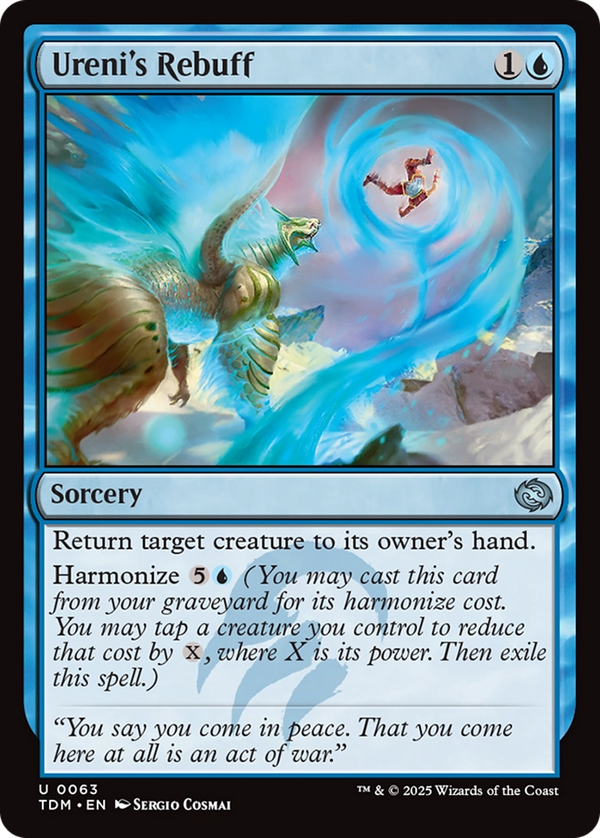
Rules text
 (You may cast this card from your graveyard for its harmonize cost. You may tap a creature you control to reduce that cost by
  , where X is its power. Then exile this spell.)